Reagan’s Journey into Prevention
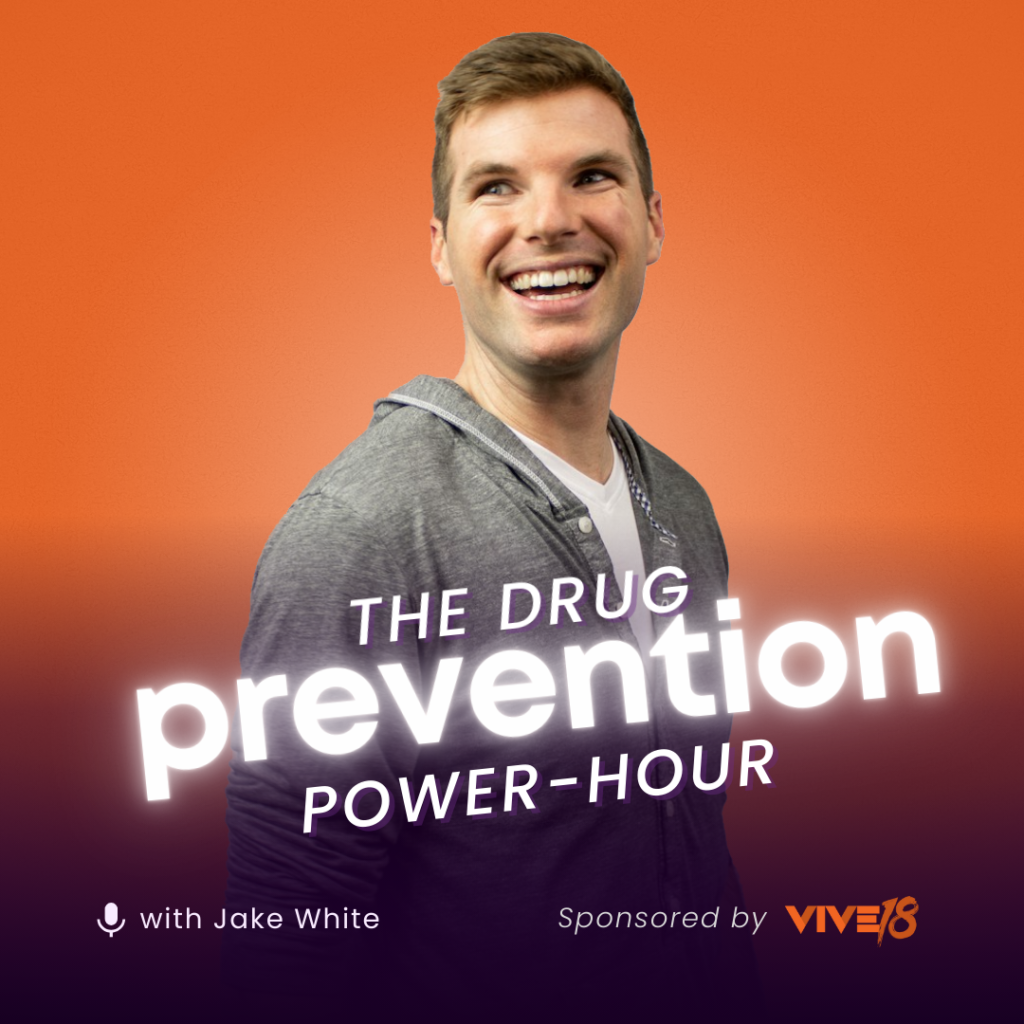
Hello and welcome back to another episode of the Drug Prevention Power Hour. I’m your host, Jake White. And today we’re hanging out with a new friend, Reagan McDonald. And just to tell you a little bit about her, she is going into school as an incoming college freshman.
She advocates for mental health and suicide prevention around the country and encourages students to take charge within their high schools and be the change they wish to see. And she’s been doing prevention for four years now. And Reagan, when we just connected again at CADCA, you were also telling me you’re excited to play basketball at your school and to continue making a difference. So welcome to the show.
Thank you, I’m really excited to be here.
Yeah, I can tell you’re smiling. You’re having a good time.
Yeah, yeah, for sure. I love it. So Reagan, just to start off, can you give us, you’ll have to practice your college intro, you know, like where you’re from, what you like to do, what you study in. So give us the good old college intro.
All right. So I am from a little town in the middle of Kansas called Clay Center. I have two older brothers that my entire childhood just like beat up on me when it came to sports. And my goal is always to be better than them and beat them in one-on-one someday, which I can say I’ve Yeah. Because of that, I’m playing basketball next year in college and I’m studying pre-physical therapy slash chiropractics and from there, I hope to become a physical therapist someday. I’m trying to get my bachelor’s degree in three years, but my dream job is actually to work for CADCA full-time so if I can do that, I definitely take that opportunity. But I’m really passionate about suicide prevention and mental health because I believe that if we’re gonna tackle substance use, then we need to look upstream at like what’s causing it. And at least in my high school, I’ve seen a lot of students who are abusing substances because they don’t know how to cope with mental health issues. And being from a rural community, there’s very limited access to resources. And so it’s been my goal over the past four years to really help people get those services, but also to just reduce the stigma. So it’s been a long time. That might be more than a college intro, but that was even better. That was incredible. And I mean, you’re speaking our language. This is great. We’ve got to look upstream. Prevention is not saying drugs are bad. Don’t do them. It’s looking at the underlying causes of, hey, what are the problems we’re trying to deal with and how can we do that better? And I love to say, how can we build a life so amazing that you would never risk it by using a drug, right?
That’s what we want to build a world like that. So take me back to your first year at high school. You said it, you’ve been doing prevention for four years. How did you first hear about prevention clubs or coalitions and what is your involvement in that?
Okay, so it’s actually kind of a funny story to me. I got involved my freshman year and I had struggled with my own like mental health problems through middle school. And so because of that, in the fall of my freshman year, our middle school counselor reached out to me he was like, hey, there’s this group called Y-Link at your school, which stands for youth leaders in Kansas. And he was like, you’d be really good for it. You should like give it a try, apply. I’m sure you’ll get in. And I was like, no, that doesn’t sound fun at all you know, that’s not happening. So I didn’t do it. I went on with my whole freshman year. And at the end of the year, I saw the applications were open, like flyers on the wall. And I walked by one and I was like, that’ll look good on my college resumes. So I guess I’ll sign up. So I won’t be much work, like, it’ll be great.
And so I signed up and I get in. And at my first meeting, they’re like, okay, go around, say your name and why you wanted to join. And I was like, well, I’m Reagan McDonald and I thought this would look good on college applications. And I was gonna leave it there. I was like, I’m just gonna show it to a meeting once a month and it’ll be fine. But about two weeks later, I was elected as president of the group and I was sitting there next to a bunch of juniors and seniors going, what did I just get myself into? But actually it has completely transformed my life in the best way possible. And it has been the biggest blessing because I’ve been able to impact people in ways that I never would have guessed just by sharing my own story and sharing what I’ve been through and what it means to me and why it’s important. And so it’s given me so many amazing people, like being able to meet you and Tomas a couple of weeks ago and just all the people I’ve met through traveling around the country and like being able to speak on it and just learn from some amazing people and relationships are huge to me. I think that that’s the greatest gift that we have is just talking to one another. And so the number of people I’ve been able to meet has been remarkable and I never would have had that if I hadn’t accidentally joined this. So.
I love that so much. So first of all, you said no. And then you said, well, I guess because it’s going to look good. And then you were the president.
Yeah, yeah, yeah. was, yeah. So four years of being the president and working on it every day after being like, I’ll show up to a meeting 45 minutes once a month. That’ll be light work. That’s nothing. Yeah.
Wow. What I’m hearing, Reagan, so there’s people listening to this right now that are in coalitions and maybe they have a youth prevention club started, maybe they don’t, maybe they’re new to this prevention world and they literally just got hired for a coalition and they have no idea what’s going on. And part of the process is, hey, you have to get youth involved in prevention. Yeah. Right. If we want to do it correctly, that’s definitely a priority. So what I want to pull from your story is maybe the maybe the opening line for a student, it’s like, it’s okay to tell them, hey, maybe you get involved because you get a free t-shirt, because you get food, because you get, it’s good on your college application. And look what it could turn into because what got you into it. And then now what you’ve gotten out of it is absolutely different. Like, yes, you’ve done a lot of things for your college resume, but you’ve experienced your own transformation. And since I saw you at CADCA and like, you’re like, you’re Miss CADCA, right? Like you’re the MC at all the events and you’re meeting everybody and making them feel welcome. And you’re promoting a sense of belonging and inclusivity that’s like, you’re doing the thing in the best way. So this is really cool. I’m so excited for the people that are listening to this. You had mentioned in part of your story, that one of the biggest things for you is sharing your story. I’m curious, is that a story of struggle and overcoming, or is it just a story of accepting who you are? What is a story and would you mind sharing it with us?
The Importance of Sharing Stories
I would love to share it. So I struggled all through middle school. I struggled a lot with self-harm, especially during COVID. And when I finally got through that, I thought that was the worst I was going to go through. And I was really just into helping other people. And I remember the first time that I actually opened up about it. was once I had gotten past it and I was clean from self-harm.
I told one of my best friends and I was like, you know, I’m really struggling with this. And she looked at me and she was like, but you’re Reagan. Like you don’t like that shouldn’t happen to you. And I was like, wow. And so, you know, I worked on it for a couple of years. And then my sophomore year of high school, I’m a big basketball player, obviously. And I tore my ACL in January and my whole identity was in basketball. Like it’s all I did. Eat, sleep, breathe. And I tore it and from there, like I just spiraled. It was horrific. I’m really lucky to still be here, honestly. I was really close to taking my own life. And from there, like, I just, I almost gave up with prevention because I was like, how am I the poster child for this? You know, like, this is what I’m going through on a day-to-day basis. And so I went through that summer and I got to go to CADCA that summer in Dallas, which I think I saw you there, but I never would have gone to CADCA if I hadn’t been hurt because I would have been too worried about missing workouts and missing practice for a week. So I never would have even gone. And that week just completely like changed my life. That’s when I heard about ENYAC, which is CACA’s National Youth Action Council, which has given me the opportunity to meet so many people and really get my foot in the door. And so from there, everything just launched. And in the fall of my junior year of high school, I had this friend and he and another friend of mine had really just like pulled me out of this dark patch. Like they didn’t even know they were doing it, but we’d play UNO every morning before school. And it just completely transformed who I was and made me so much happier. And then in October he ended up taking his own life. And so from there, I just kind of made it my mission that like, I’m not going to let his life go as just a statistic, you know, he deserves more than that. And I wish I had been there for him. And so because of that, like, I’m gonna do whatever it takes to help that one person that needs it. Cause you never know who’s struggling really.
And I just, know how many people were there for me and got me out of that dark place. And I want to be that for someone else. And it’s not about like how scared I am. Cause I hate public speaking so much, but I’ve kind of learned to put myself out there and be like the bubbly outgoing person because it could help one person and one person’s worth it.
And it’s not about me, it’s about his memory and really making that worth something.
Wow, Reagan, this is incredible. I’m proud of you. Thank you. You’re such an example of what it’s like to be like a mission-driven messenger. And I say that phrase, I’m part of this group coaching with this guy, it’s actually a couple, Rory and AJ Vaden. And their thing is like helping people build a brand that changes the world. And they call everyone mission-driven messengers.
Balancing Sports and Advocacy
And I see that with you is like, you have a purpose and you have a mission and it’s not about us getting uncomfortable or what we do and don’t want to do, but just using the gifts that we’ve been given to make a difference. And that’s so cool. And you’re you’re a summer senior year going into your first year of college, correct?
Wow. Wow. my gosh. That’s incredible. Thank you. Do you, so you’re going to be doing basketball. That’s a big commitment in school. Do you think you’ll have time for prevention or is it just who you are now or what do you think?
I mean, as you said, I miss CADCA, which is kind of like the highest compliment you could give me. So I really appreciate it. Which that’s always kind of been my goal. so like to hear someone say that, I was like, wow, like maybe I did make it. But I definitely think I’m going to stick with it. Like it’s just become such a huge part of my life. And I think the biggest obstacle for me as I’ve graduated and I’ve gone into like, I’m going to college now, like, kind of have to decide what I want to do with my life. And it’s like, I don’t really know, like, what career I can make out of this, you know, like, all of us own five, one a like, I remember when I saw you in great bend for the wildlife conference a couple years back, just like watching that and being like that’s what I would do, you know? Like that sort of thing, just like speaking and feeling like you’re making a difference and helping other people, like that’s just a huge dream of mine. And so if I could get into that field, that would definitely be like my number one goal. ⁓ Just because I am aging out of that like youth sort of certification. And so just like figuring out how to continue it, I think I’m gonna try to stay involved with Y-Link in Kansas and work for them as like an intern this year, but you know, it’s the type of thing that it’s not really a job for me. It’s a passion. And so I don’t really care if I’m busy and if like, it’s hard for me to fit it in. Like I want to do it because it means everything to me. So.
That’s cool. Well, just keep up doing the good stuff you’re doing and who knows, maybe Vive 18 offers you a job one day. You might not be able to help it. That’s so cool. Okay, so you’ve mentioned a couple things so far. Our listeners probably know what CADCA is. If you don’t look it up, CADCA.org. It’s a big umbrella organization for prevention.
And a lot of us meet there twice a year and they have great resources. You also mentioned Y-Link, Youth Leaders in Kansas, which I remember that conference that we came in and spoke and trained a little bit with y’all. And I think I cooked y’all in some bean bag toss and stuff like that.
We played spike ball, but I remember I won. So we did play Spikeball! We did! I don’t remember you winning though. I refuse to remember. I don’t think so.
You must have poor memory, but anyways. How dare you? I’m my own show.
You brought me on here. That’s right. knew what I was getting. That is awesome. I love that. Okay. So Y-Link and then as far as your local, was Y-Link and CADCA your advocacy work or was there a prevention club at your school? What did that look like?
Community Engagement and Activities
Like our coalition in our town is called the Clay Counts Coalition. And they sponsor the youth coalition through the school, which is WhiteLink. And we are not, the high school is, the high school WhiteLink chapter is not school affiliated. And so because of that, we were solely funded through the Clay Counts Coalition. And then the Kansas Department of Aging and Disability Services issues a grant.
That’s a lot to memorize. Of two YLink chapters throughout the state. And so that’s how we received our funding. But when I took over YLink my freshman year, I, it was very much like drug and alcohol prevention. And the kind of notion with it is what you said about like, don’t do drugs or don’t drink. Like it was very much like, the reason I didn’t want to join was I felt like it was very much like shaming and.
No one wanted to like, you didn’t want to listen to that because you just feel bad, you know? And so when I took over myself and my vice president, we decided we wanted to change it from more like substance abuse to very much mental health and like giving students what we called alternate activities, which is kind of like the parties that you threw in high school, I mean college, sorry. And so we did mainly what we call fifth quarters, which is after basketball and football games.
And I’m from a really small town, so there’s nothing to do but drive around. we would have, literally we had everything over those three years. We did ⁓ inflatable off-school courses, we had spike ball tournaments, we have an annual watermelon relay, which means you have to run a four by four relay with a watermelon instead of a baton. Super popular, super popular. We’ve done like jousting. We’ve had literally everything.
Our head of counseling services said that she’s never seen a school event draw in so many different people. You we have homecoming dances, have sporting events, we have plays, but like the fifth quarters are what brings everyone together. And it gives you something to do, but it’s a safe alternative. And it’s something that we were really lacking before. And so I feel like that has been the biggest way that as a community, we’ve utilized our advocacy work.
And I still very much care about substance abuse, but I definitely have shifted it to more mental health. And then our Clay Counts Coalition throughout our town is very much like substance abuse and how do we keep kids clean through high school.
Okay. That’s, Ooh, I got excited all over again because yeah, fifth quarter sounds amazing. I’m imagining all the fun, the competition, like the camaraderie. that is so good. Okay. Can you, those are so good. Watermelon relay. What are some other ones that people will probably just, I mean, spike ball tournament sounds amazing. Watermelon relay, super funny, amazing obstacle courses.
Were there any other that you could throw out there that people might be inspired by that you can remember? Maybe some of your other favorites.
We did jousting. Like we brought in this inflatable jousting ring and let everyone joust, we got our like auto repair shop to bring a crane and pull a tire up in the air. And then you had to kick a football through a tire. And if you did it, you got a gift card, we did that on a couple of days in one year. Yeah. We’ve had that, but we’ve also had pretty chill stuff. Like we did a pumpkin painting, party around Halloween. ⁓ In February, we made like Valentine’s cards to go to the nursing homes. And that was very successful. We have had pizza party, we do pancakes after home basketball games. Like as people are leaving and that’s even more like an outreach event because we just give them to everyone. So we’ve done all of that.
We have had flag football tournaments on the football field. We do a luau every year. And so we have like limbo and all that kind of stuff. We have all kinds of hot dogs at those. Really just like we focus a lot on like you gotta have food and you have to have like something for people to do. And we always have music, things for kids to do. We rented out an old building downtown and they have like card games and a basketball goal and a pool table.
We’ve had a casino night, which is not gambling related. We have like just card games and a lot of camaraderie. it’s been, it’s something that I’m very sad to leave behind for sure. Cause they were so much fun.
Yeah. Well, hey, you could throw sober parties at your school and keep it going.
Good. I’ll help you out. I’ll help you get some sponsors and Okay. That was good. Which by the way, you’re going to Wesleyan in Kansas. Kansas Wesleyan. Is that what it’s called? Yeah. Okay. Cool. So everyone tune in the basketball games. You’ll see Reagan. That’s so exciting. And those are amazing ideas. Oh my gosh. I’m going to throw one out there, Reagan, because my wife, Emily, did you meet her at the conference? I believe so.
Yeah. Okay, cool. So she was before she started working with me for Vive 18, she was a resident hall director. And so her and her student leaders would run the dorms, the residence halls. And one of their events I thought was so funny. They bought an old car from the junkyard and then they bought baseball bats and spray paint a finals week de-stress event and people got to take their turns smashing stuff and painting things on it. It was like, it was incredible.
Yeah, we do that. We have a car smash every year.
Yeah. Okay. I was like, you, it sounds like when you mentioned the crane and stuff too, I was like, okay, are next level. Oh, that is so, so good. Okay. I would love to get some advice from you, Reagan. So if someone is listening and they want some help getting young people involved in prevention, what are some do’s and don’ts from your experience, from your adult mentor. If maybe you’ve had a good experience and you’re like, Hey, do this because our guides do this and it’s incredible or Hey, maybe we’ve had an experience that wasn’t so good. Stay away from doing this. Do you have any thoughts?
Advice for Involving Youth in Prevention
Yeah, for sure. My number one, like, don’t that comes to mind is just like, don’t shame, you know? Like, no one wants to be called out. It’s a very uncomfortable thing. And I think it’s more important to call people in and just make people feel welcome. Give them like open the door to everybody because you never know who’s interested. You know, you can look out and be like, these people are very popular. They’re very involved. Let’s invite them but there’s a lot of kids that you wouldn’t think of that could end up being huge resources to your coalition. And so I would definitely make sure to just open the door to everyone and be very transparent and welcoming to the entire student body because everyone can make a difference and it takes a whole team of people to do that beyond that, my number one do is like, I guess it’s a don’t, don’t give up. Like, you know, it took two different people for me to actually apply.
And then it took like physically making me president and forcing me into this for me to get into it. Like I would not have gotten here on my own. And so I think that like, if you see someone who has the potential, who has leadership qualities, or just that you think has a story to be shared, like give them that belief. At least for me, the biggest thing has always been, whether it’s been in school or in sports or in prevention, like just believing in someone.
When someone believes in me, feel like I have the resources to do it. And like, it’s someone that I don’t want to let down, you know? And just giving someone that hope that they could be something great means the world to them. And you can never underestimate what like, hey, I think you’d be good at this or hey, why don’t you give this a shot? Or these are all the things that could happen from it. Just like pushing someone out of their comfort zone because you see potential in them and not giving up on a kid. Like, people could have given up on me and there are so many things I never would have experienced in life and so many people I wouldn’t have met. And I’m just eternally grateful that my mentors pushed me and gave me that opportunity. And even in addition to that, our sponsor’s motto is youth led adult guided. So like during our meetings, she sits back and lets me run the whole thing. And then when we need help with something like, Hey, is this even feasible? Like, can we bring in a crane and KK football through a tire, like, and she sits back and she goes, yeah, we could do that. Or no, you might want to dial that back a little bit. But she has just been incredible, you know? And giving me a voice and amplifying that voice and taking me to CADCA in Dallas that first year and just giving me the opportunity to get my foot in the door. And she has been nothing but supportive.
Actually, right after we talked at CADCA, I went to her and I was like, they asked me to be on their podcast. And she was just over the moon excited for me. She was like, I could see it all over your face. You’re so excited. And just the relationship that she has built with me and the belief she has always had in me has been the biggest difference. That has been the difference maker in my life is just someone believing in me and seeing my potential.
Wow. Okay. want to pull. There’s so much to pull from there, but you said student run adult guided. Absolutely. And you had an advisor who would sit back and let you run the meetings. Absolutely. How long was it? When you became the president, was there a time period where someone else was running meetings and training you until you got to that point? Or was it like, Hey, I believe in you, you could do this. Like you’re gonna figure it out. And was there a learning curve for that? How did that go?
Mentorship and Leadership Development
So I became president in like May or April and then we had summer break. So I had one month because we were gonna meet in June and I had that month to go back and forth with our advisor, her name’s Lori. I had that one month to go back and forth with her and figure out how I was gonna do this. And I remember being in Hobby Lobby with my mom one day and like having a very casual conversation and all of a sudden Lori’s calling and I need to like turn on my professionalism and figure this out.
And from there, like she really guided me. And I will say those first couple of months, like trying to plan meetings and trying to keep everything in line, I really struggled. Like I was up every night until well past midnight trying to get everything done, trying to get everything organized. And like I didn’t know how to delegate. And she had to come to me and like, you can’t do it all. You got to give this to other people. You need to find like, oh, you need officers like you can’t just put it all on you. And so she definitely had to step in and like overrule me at times. And looking back, I learned how to delegate and it made my life a lot easier. But just like, I was kind of just thrown into it and she was always right by my side and I always knew I could lean on her. And whenever I went to like plan a meeting, I would always reach out and be like, Hey, what do you want us to talk about? But at the end of the day, it came down to, well, what do you think you need? You know how can I help you? How can I support you in this? And just that freedom to have a voice and to make my own difference really mattered to me.
That’s cool. think, wow, Lori sounds incredible as like a coach and mentor. And faith is a big part of my life. So when I look and learn from the example, even of Jesus, like he didn’t just tell people what to do. He was modeling it, living with his disciples. They were with him. And I think that’s a great mentorship relationship is it sounds like Lori didn’t just tell you what she needed and said, like, figure it out as she was figuring these things out with you, coaching you along the way and having tough conversations when it’s like, hey, you’re stretching yourself way too thin. Like this isn’t going to work long-term. We need to find you some officers and being that person that’s consistent in your life. That is definitely something that even I, as a young professional, young as relative Reagan, don’t comment on my age, okay? She’s like, I’m not saying anything.
That’s off limits. That’s off limits. Like that’s one of those things I think we learn in each role because we love it, we’re passionate about it. And then we get called to something even higher, a higher standard. Something like we have to step up our leadership, which means making new disciples, mentoring others. And now she’s modeled that with you and now you can model that with your officers. And that’s how the group grows and now is continuing. Even though you’re going to college and you’re going to miss it.
Hopefully that Y-Link chapter at your school is gonna thrive because you weren’t doing it all yourself, you know? So that’s big. Yeah, okay. my gosh, I could talk to you forever. But we’ll have to schedule another episode sometime. So let’s end with this, Reagan. First, I just want to say, keep up the incredible work. I think that when you go to college, just like what happened in high school, I don’t know what it is but I feel like something’s gonna happen in college where you get to fulfill your dream. Like this staying in prevention and speaking to people, being a good influence, helping people with their mental health and suicide prevention and substance use prevention. Like, I don’t know, I feel like you’re going to continue that really, really well and it’s gonna provide opportunities. And yeah, of course. And I’m a fan, I’m a super fan. So anything you need, you email like whatever it is, we’ll get a cheerleader in your corner, okay? And we’ll be logging on to the games too.
If you had, I like to end with some sort of either a helpful quote that you find helpful or you’re passionate about, or just a last note of encouragement for our listeners, and then we’ll leave them with a way to keep in touch.
Okay. So I had two quotes, sorry. I love that you put your faith into it because that’s a huge part of it for me. so, a thing that I kind of live by is God would never give you an opportunity if he didn’t think you could handle it. And so from there, just like every time something’s placed in my lap and I have to make the decision of, I really want to get up and talk in front of all those people and like put myself out there.
I just remember that and I’m like, you know, this is a huge opportunity and he wouldn’t throw it my way if he thought I would stumble, you know, he thinks I can do it. And so that’s been a huge saving grace for me. And then beyond that, like my life’s motto is I-Nam, which stands for it’s not about me, which just kind of serves as a reminder that like the work I’m doing, it is not about like me getting glory or all the paths on the back that I could get afterwards. Like, yes, it’s great for you to say like, I miss CADCA and like I’m the MC and everything. Like, yes, that’s great. And it feels great, but I don’t do it for that. You know, I do it for my friend and I do it for all those people that feel like they’re alone and just need that one person to be that mentor for them, give them that encouragement to keep going. And so it’s not about me. It’s about that one person that I can. Perfect. I’ll take it.
Reagan, this was so awesome. I love who you are. Keep doing it. You’re incredible. If people want to follow you, they can watch the Kansas Wesleyan basketball games. Yes, absolutely. It looks like you have an Instagram account and then Kansas YLink has an Instagram account that we can put in the show notes.
If anybody wants to ask you questions about prevention or a student out there is thinking, hey, I really want to talk to Reagan, what’s the best way to reach out?
I would definitely say either my Instagram or I can put my email in if that helps. I would love to help out anybody just like, what I would say is just reach out. Like I’m a nice person at least. So like, I know it’s really scary to like put your foot out, put your foot in the door and make that contact, but like just don’t be scared because you never know where it could lead. So.
Yeah, so good. Well, for everyone listening, this has been another episode of the Drug Prevention Power Hour, and we will see you next Monday for another episode.