easy-to-use
flexible
& fun!
A toolkit designed for engagement, not worksheets
The Vive18 Toolkit is designed to move students from passive listeners to active participants. Instead of lecturing or checking boxes, this program invites students to think, talk, reflect, and apply what they’re learning in ways that feel relevant to their lives.
Each toolkit includes interactive activities that encourage critical thinking, peer discussion, and personal reflection—helping students build skills around decision-making, social awareness, and self-management without feeling like they’re “in trouble” or being talked down to.
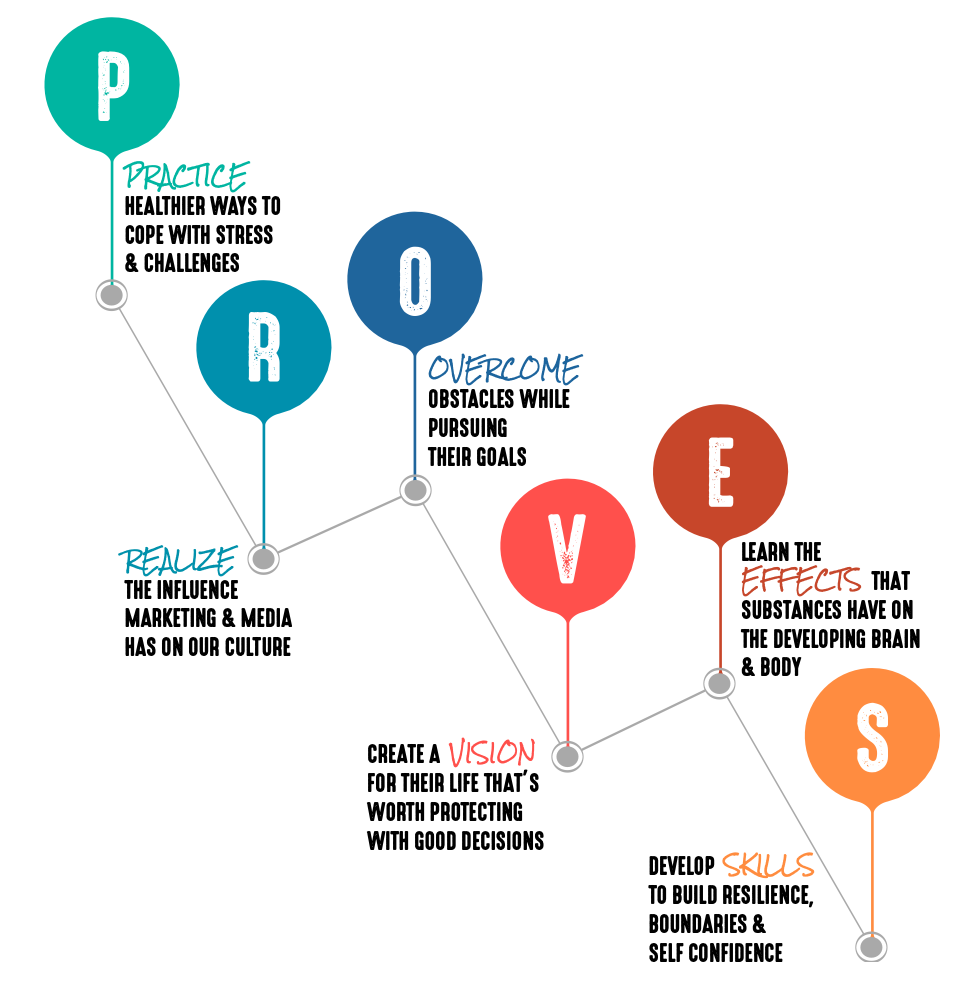
Designed to support both prevention and SEL outcomes
Backed by research, built for real classrooms and groups.
Interactive and experiential
Students learn best when they’re involved. Activities are designed to spark participation, conversation, and collaboration—not passive note-taking.
Aligned with SEL competencies
The Toolkit supports approximately 90% of core SEL skills, helping students build emotional awareness, relationship skills, and responsible decision-making.
Easy to facilitate
Clear instructions and flexible formats make it accessible for educators, counselors, and prevention professionals.

Built for schools, coalitions, and youth-serving organizations
The Vive18 Toolkit is a flexible curriculum that’s ideal for organizations that want practical, ready-to-use resources that fit into existing programming without overwhelming facilitators or students.
It’s a strong fit for:
- Middle School
- Upper Elementary
- Peer Leaders
What students and schools are saying
From classrooms to campuses, hear how Vive18 is changing conversations, shifting culture, and making a real impact where it matters most.
What students and facilitators can expect
Each Toolkit includes guided activities that are easy to facilitate and flexible to adapt. Sessions can stand alone or be layered into longer programming, making it easy to fit different schedules and group sizes.
Students can expect interactive exercises that challenge assumptions, encourage reflection, and build confidence in making healthy choices—without shame, fear, or pressure.