Victoria’s Voice: Mission and Impact
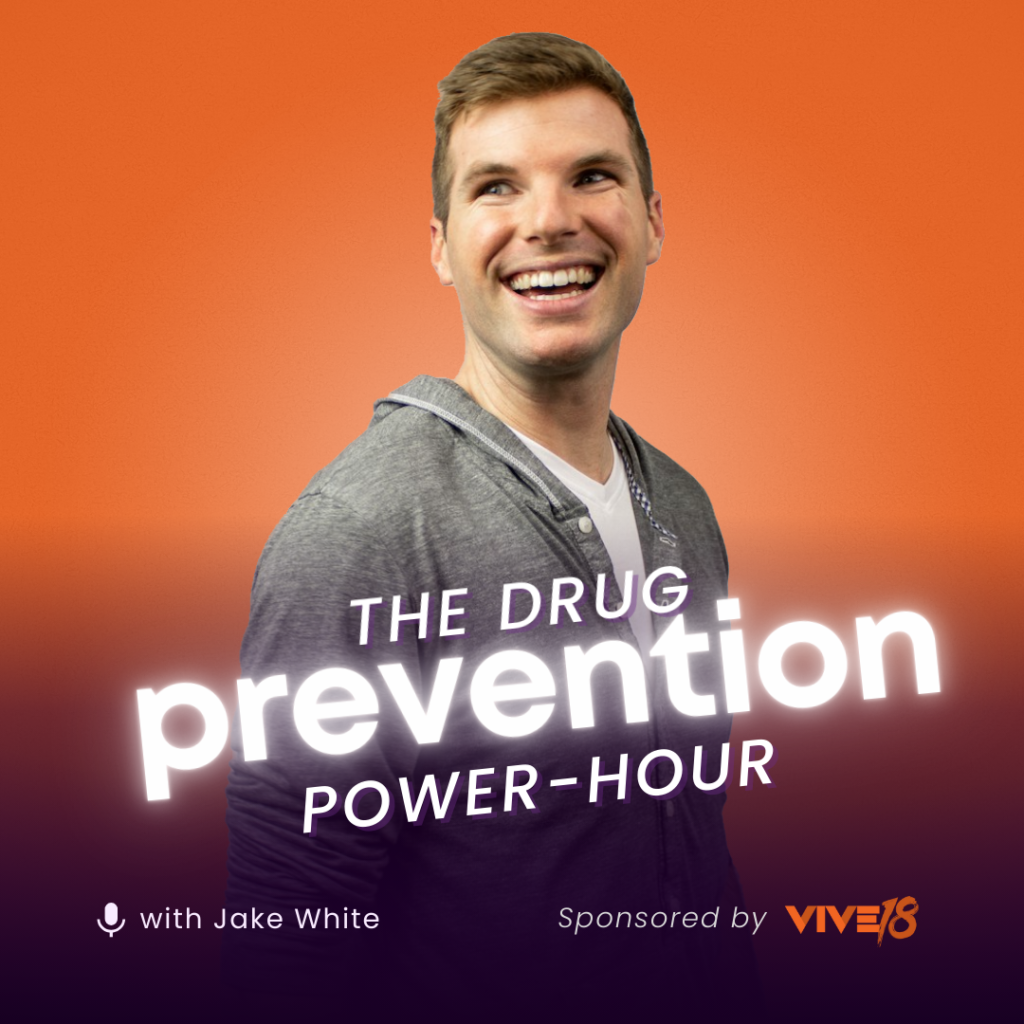
Welcome back to another episode of the Drug Prevention Power Hour. I’m your host, Jake White. And today we are hanging out with a new friend, Leah Shepard. Now, before I tell you about Leah, I got to do a quick, quick plug. if y’all haven’t heard, we are hosting a prevention conference on a cruise ship in April, 2026. I just sent out a call for proposals. So if you have some information that’s going to be helpful for professionals doing prevention work, and you want to attend this awesome conference, that’s going to save us a ton of money be great on your budget and offer some innovative solutions for 2026, 2027 this is the event to go to. go to preventioncruise.net to check that out. Now, Leah, we have been partnering and seeing each other all across the prevention sphere, for a couple of years now. And Leah is the executive director of Victoria’s Voice and they’re doing life-saving world-changing work, on honestly helping us do prevention better.
And also, how do we deal with this epidemic of opioids and overdoses and all that good stuff? So Leah, y’all span the gamut when it comes to helping coalitions and schools and partners, but will you just do us a quick favor, introduce yourself and then give us your basic intro of Victoria’s Voice.
Leah Shepard, you said, executive director for Victoria’s Voice. We’re based in Orlando, Florida, but we’re a national organization founded actually 10 years ago after the death of Victoria Siegel, daughter of David and Jackie Siegel, real estate and resort developer here in Orlando, Florida. Our foundation stands on the pillars of the reasons that David and Jackie say that they lost their daughter. 10 years ago, first responders did not carry our candle locks on the way that they do now.
Victoria had a heartbeat and a pulse when the first responders arrived and they didn’t have a dark hand and she lost her life on the way to the hospital. So naloxone awareness and distribution is one of our main pillars. Secondly, David and Jackie say they missed the signs. They knew that their daughter’s behavior had changed and they knew that she was experimenting but certainly not to the extent of the drug use that was going on and that she would ultimately die of an overdose. And so our vital signs parent programs is another main pillar , third is Save Our Kids. It’s our school assembly speakers program. We have a group of bereaved parents nationwide called the Angel Army who go from different schools, boys and girls clubs, YMCAs, and speak to kids about their experience and warning them of the dangers of drug use.
Wow. Okay, that’s a lot. So you’re helping with making sure that Naloxone is available and accessible, which I know you all have done a ton of great work with. And then you do have the Angel Army, which is helping young people and you have vital signs for parents and that adult community. Leah, I’m actually curious how did you get involved as the executive director and what are some of your projects you’re really excited about?
Naloxone Awareness and Accessibility
I got involved through the Westgate family, Westgate Resorts, where David Siegel founded, knowing one of their business executives there, and they were in need of some kind of governance and fiduciary guidance, kind of back of the house work. And so originally started in a contract role, an organizational leadership and structure and just really became captivated by the mission, how can you not? You the whole purpose is to stop kids from dying from drugs. And really, I’m probably one of the few people who doesn’t have a personal experience, who hasn’t been touched by a family member or a friend’s child dying of a drug overdose.
And it’s just something where I couldn’t say no. I’m really compelled and motivated by the mission and the great work that we do. And more than anything, I mean, you follow the data and it’s important. I mean, the CDC reported last year in 2024 some good news finally, that drug overdose deaths nationwide are down 24%. And so that inspires me and it inspires our team that our mission is working, that education is working, that the distribution and greater access to naloxone is working. So that just really motivates all of us every day.
Yeah, Leah, had a friend from church, his name is Torin, and I asked him if I could share this, but he said that he had his life saved by Narcan seven times. And that if you ask anybody else, someone might say, hey, you can’t recover from opioids. You can’t recover from fentanyl and these things. And it’s sometimes too easy to believe that, but it’s false.
Torrin is just one example of the friends who are in recovery that we have that are showing there’s there’s hope and Naloxone is important. And we need these second, third chances because you look at, like you look at Torrin today, he’s the one, he will not pass by somebody that’s homeless without having a conversation with them and sharing a resource or a piece of food or something yeah, he, he will not miss an opportunity to share the hope of recovery with anybody. And just such a light in the world. I, I think that’s Naloxone super important. How do y’all.
Yeah, it really is. And it’s also poisoning. mean, you have people who aren’t they’re truly being poisoned. There’s a story in the state of Florida that made national news of a family who rented an Airbnb and there were traces of cocaine, fentanyl-laced cocaine on the coffee table and the toddler, know how toddlers touch everything and put everything in their mouth and ingested the fentanyl-laced cocaine and died right there on the spot. That child was poisoned. They didn’t overdose. And so every person she carrying a wax on, it should be as ubiquitous as an EpiPen. And the more that we can get the word out, that parents everyone should carry no locks in regardless of what you think your children or your family are doing you could save somebody’s life.
Yeah, exactly. Every school, every workplace, every church, every organization building for sure. And y’all do trainings for that as well as advocacy. Like you are advocating to get it everywhere.
We do. it’s, is, the training is simple. mean, obviously it’s, it’s the end nasal spray. We don’t use the injectable. It’s a nasal spray. And there’s good Samaritan laws in every state. So if you administer naloxone and the person doesn’t make it, you’re protected from any sort of liability or any sort of lawsuits. And so that’s something we really try to educate the public about as well.
That’s good. I had an experience at church where one of the students we believed had some laced products and there, I didn’t realize the signs because I hadn’t gone through the training, but one of my friends had and he’s like, Jake, her pupils, when you shine a light on it are not getting smaller. The pimples or the acne is, it’s very pointed and red. Like these are signs we need to get her, the naloxone right away. We did contact their parents and stuff.
And it’s somewhere you wouldn’t think you would need it at a church youth group, but you’re, reaching out to students who need it and they’re showing up. like, yeah, there’s really not a place you don’t want to have it and that’s, let’s go back to Victoria’s story too, because, you, there’s a book called Victoria, is it called Victoria’s voice or her diary called Victoria’s Voice is her diary.
After she passed, one of her friends reached out to Jackie and showed her a text message that Victoria had said, should something ever happen to me, I want my diary published. It’s in my nightstand. And her parents went and found it and read it and really hesitated at first in publishing it because it’s so raw and it’s real. It is the actual pages of this young girl’s diary. And it’s over the course of four years. And you see her spiraling. You see where it starts with recreational use. And then she ultimately goes to a psychiatrist and is put on prescription antidepressants and then starts combining drugs on top of drugs. You see the intersection of bullying that’s going on at school, conflict with friends, her low self-esteem and the conflation of all of that, and then turning to more drugs. And it is a cautionary tale to read this diary for any parent who thinks they know what’s going on in their child’s life and in their bedrooms and in their heads and in their social circles. You don’t, and David and Jackie didn’t. And so we do publish the diary. We distribute it for free conferences where I’ve met you at CADCA. Our school assembly program speakers distribute this at schools. It’s available for parents. It is available for sale on Amazon on our website, but for the most part we distribute it for free and it’s been a fantastic resource.
Yeah, yeah. I know I saw some students that were taking it in, some high schoolers and saying like, hey, this is really vulnerable. And it is a light bulb that someone’s experience could be like that. But there’s also things that they can relate to, like, I felt that way before, or, that’s a reason why someone might start using. And therefore, if we’re in prevention, right, if we’re these student leaders in prevention completely.
We can help build these protective factors around that kind of stuff or be a safe community for someone to go if they’re experiencing those things. Can you tell me more about vital signs?
Vital Signs: Educating Parents
Yeah, so Vital Signs, as mentioned, was born out of dating Jackie, stating that they missed the signs. And we wanted a comprehensive program that really pointed parents into the direction of what are the signs? What should I be looking for? And so it’s an eight-part video series that lives on a platform that you can get to on our website. It’s totally free. And they’re in small, like three to five-minute bite-sized segments. So parents may not have half an hour or an hour to sit down and go through this whole series, but they may be able to do one a night to five minutes a night or when you’re sitting at a baseball game or your kids baseball practice. But it goes through really starting with a family constitution. What does your family stand for? What matters to you and what doesn’t matter to you as a family and getting your kids involved and sitting around the table and talking about what are your shared values as a family. And then it goes into teaching parents about low self-esteem, bullying, sexual behavior, alcohol, marijuana and vaping drugs, and then the last module mental health and suicide.
And it’s the when we talk to parents about what are the signs one of the signs the number one thing is what is a change in your child’s behavior and it can be as little as gaining weight losing weight Going into the room after school and closing the door and they never used to go into their room after school and close the door It’s not coming home from school right after school and they don’t have activities and they don’t have clubs that are involved with it’s are they changing friends? Are there some new friends? Are they not hanging out with their old friends? It’s just simple changes in behavior that indicate that something else could be going on. And maybe it’s not, but have a conversation with your kid the minute you notice something changing in them.
Yeah, that’s so important because there’s times in adolescent development where some things will happen. But if you’re curious about it and you can, like as the parent, you have the permission to ask anything, to go through their room, phones, whatever it is, like, yeah. And I would say there’s always the parents that are thinking like, no, they’re not going to like that. And the truth is, no, if you’re doing your job well, they’re not going to like a lot of things that you do, but they’re going to be safe. And I imagine just from losing a daughter, I’m sure there was, there’s so much hurt with that. And this information that y’all are sharing is life-saving and it’s so important because it’s stuff that they feel desperately like, that could have helped Victoria.
Yeah, and it’s blame. mean, like so many of these parents sadly who lose a child, whether it’s drug overdose, drowning, car accident, it’s the blame game. They start blaming themselves. Why didn’t I notice that? Why didn’t I see it? You know, children gain weight, children lose weight, children change friends. Some of these little behaviors that I’m talking about don’t necessarily mean your child’s doing drugs, but it could mean that. And I think that’s where parents have a tendency to beat themselves up when things happen with their kids, not noticing these things. So notice these things, have a conversation times out of 10 it doesn’t mean they’re doing drugs but if you have that conversation it lets your kid know that you’re paying attention and that you care.
Yeah, absolutely. And boundaries are a form of love. Like that stuff is showing that you care, just like you said. Okay, I want to get, if you have anything, is there a specific tip if you’re working in a coalition or maybe you’re a parent and you’re like, okay, I want to do something today, just one thing to start prevention in my family, or at least one thing, like what comes to mind for you of like something we could start doing, right?
The easiest thing is have dinner together as a family. That may sound simple, but it’s not because one kid’s playing soccer and the other kid has band practice and dad’s late at work and mom’s, know, a myriad of other things. Set even if it’s one night a week and it’s every Wednesday night, have dinner as a family and start a conversation with your kids and say, what’s going on in school? I hear that drug rates are going up at your school. I hear drug rates are going down. know, the number, parent engagement is the number one predictor of whether a child is going to engage in unhealthy behaviors like substance use, sexual behavior, anything like that. And so honestly just start with dinner. The simplest thing you can do is have dinner, put the phones in a basket, nobody gets to have their phone, and just sit around the dinner table and start having conversations with your kids.
That’s so good. I think there’s actually statistics around that saying like students who have dinner with their parents are, I think it was four or five times less likely to use, which is that’s wild. But I think it goes to show we’re busy. One thing you got to do for your kids is feed them and probably drive them somewhere. if those are the times you have in the car to say, hey, let’s make this intentional, put away your phones. We’re going to connect with each other then we gotta take advantage of those small moments. So I love that tip, start having dinner together.
I could quote statistics all day, SAMHSA is another organization we rely on 80 % they did a survey of kids aged 10 to 18. 80 % of them stated that they who didn’t drink stated it was because of their parents, because of either conversations they had with their parents or mirroring their parents behavior. So everything starts at home. I know you think my kids are gone eight hours a day at school or after school activities. The parents don’t understand they are the number one influencer. It’s not the Kardashians. It’s not Sabrina Carpenter. It’s not necessary. You know, we hear about these Influencers, parents, you are your child’s number one influencer. Use that to your advantage.
Dang. I love that. That’s it. Man, parents oftentimes don’t believe that they’re that protective factor. Like you said, well, they don’t listen to me or they’re on their phones or they’re at school and they’re with their friends. But they value your opinion way more than you think. They want to make you proud. Yeah, you’re right. Yep, absolutely. And I remember wanting to make my parents proud and I remember asking students like, and data proves it. Yeah, there’s the data to back it up.
Doing this for a decade, I’ve had so many different events where I’ll just ask students, hey, why don’t you use if you don’t or if you do, hey, why did you start in the first place? And I’ll never forget this one girl in high school said, I just can imagine the disappointment on my parents’ face if they were catching me doing something like that, which said to me, wow, you really value that opinion. That really matters to you.
That’s good. Can you tell me more about the, I think you said it was the Angel Army. What comprises this Angel Army and what’s kind of the approach or messaging you’re bringing to students?
The Angel Army: A Coalition of Parents
Yeah, so really what this was born out of is when you lose a child to a drug overdose, you join a fraternity you never wished you had. But what you, know, who Jackie and David have met and who I’ve met through this work is a nationwide network of parents to all experience the same loss, experience the same grief, and they’re looking for a place to channel that. Whether it’s speaking to kids in schools to prevent drug overdose deaths, whether it’s speaking to other parents at robbery clubs, or whether it’s getting involved in legislation and public policy. And so there’s safety and there’s strength in numbers. And so if we could create a coalition of all of these parents and find ways, whether it’s just a space on a Monday night to hang out and have a cup of coffee and talk, whether it’s working on active legislation or whether it’s speaking to kids, let’s create an army of parents where we’re all marching in the same direction with the same mission of stopping kids from dying. And so that was really the premise behind trying to do it is create an organized group of parents. We don’t charge membership fees, there’s no dues. There’s a weekly Monday meeting.
If there’s any of your coalition members out there who have parents who are in this space, send them our way. Go to angelarmy.com and they can register for free. And if they want to just be around other parents who have a shared experience, we can do that on our Monday night meetups in multiple cities. If they want to go speak to kids at schools, we can schedule you to speak to kids at schools. And if you’re interested in legislation, we can point you in the right direction. One of our parents who we just who really is, you know, stand in the way of a mama bear, her name is Julie Shamash in California. Her son Tyler died of a fentanyl poisoning and overdose. And she found out after the death of her son that hospital ERs do not test for fentanyl.
So if someone comes in and has a drug overdose and lives or has a drug overdose and dies, fentanyl is not one, as of three years ago, one of the chemicals that they were testing for, one of the drugs. Well, that seemed absurd. And so she actually had a long past in the state of California called Tyler’s Law, where it now requires ERs to test for fentanyl. And so the whole long story to the long answer to your short question is that in being inspired by her parents and the work they do she has now inspired parents in other states So in the state of Florida it was passed just this past summer gauges law same thing named after a different child But ER is in the state of Florida now must test for Fentanyl when someone has an overdose and so Coordinating and kind of creating a coalition of these parents to make that kind of movement and make that kind of impact is the whole goal of what we do at Angel Army.
And that’s so powerful because when I’ve met a lot of, not a lot, but I’ve met quite a few parents who have lost their child. I mean, talk about a life-changing experience and you want to do something. You also don’t want to feel alone. So if this sounds like such a need for, hey, we can support each other and then also we can make a difference together. Cause I think the main thing is like, hey, they want to put everything behind saving more lives, right? They their money, their time, their resources, their passion. So if the Angel Army is the platform to bring all of them together, that’s going to be a platform that changes the world for sure. And it sounds like it’s already happening with new laws and different speakers and stuff like that. And shout out to the Fentanyl Fathers. I was talking with them the other day that they’re gathering some great data, working with you guys in the Angel Army too.
It’s really, really awesome. It is. There is, like I said, there’s strength and safety in numbers and that’s what we’re hoping for for these parents and more than anything too, they don’t want their child to be forgotten. And so sharing their child’s story gives them a way to keep their memory alive and it’s really beneficial and helpful to a lot of these parents as well.
Yeah. that’s so good. I would, I would encourage anybody who is working in a coalition capacity to check out angelarmy.com because as when we think about the prevention workforce, you oftentimes think of someone you have to pay to do something, but this passion for a bereaved parent is worth way more than any money. They probably wouldn’t even accept your job or your money.
They really just want to change the world. And so the workforce and the life change that can happen by allowing them a runway could be game-changing for your community and for your work too. Like I want to work with passionate people. And I know that people in recovery are super passionate and these adults who have lost someone, we want to give them the tools to succeed.
Well, you do want to the tools and they’re not as much as you hate to use as terminology, they’re experts. mean, someone in recovery is an expert at drug addiction and how what got them into it and why they started doing drugs and these parents are experts at losing a child and coming up with ideas and ways to try to prevent it from happening to other parents.
Yeah. And sometimes they’re just missing like that little piece that you have as the professional, right and so if you can get together, that’s, that’s super fantastic. I, I want to ask you one more question before we close with some ways to get to know you, Victoria’s voice organization a little bit better and that is anything that you would be able to share, if you know, Leah, about tips on advocacy, because you have also.
I believe y’all are celebrating on a lock zone day or something where you had, you’d created this, new legislation or a celebration around this you have any tips? Please tell us what that is specifically. And then if you have any tips for advocacy, that’d be great.
I started doing this work you know there’s a day for everything. National Puppy Day, National Margarita Day, there’s a day for everything. And I noticed there was National Overdose Awareness Day, National Fentanyl Awareness Day, National Opioid, everything about the problem. There was no day about the solution, and the solution is naloxone. And again, that’s one of the pillars that we stand on. And so we met with Senator Rick Scott from Florida and asked if he would consider co-sponsoring a resolution. It’s not a law, it’s not a bill, there’s no funding attached to it, but just naming a federal designation June 6th the day that Victoria died is National Melox on Awareness Day and he said absolutely and so it was co-sponsored it’s bipartisan from Senator Ed Markey of Massachusetts and we have National Melox on Awareness Day on June 6th and what we’ve started doing is a campaign to light up purple and so last year we had over 150 buildings and national landmarks across the country lit up purple. Empire State Building, Niagara Falls, I mean a lot of really, really big landmarks. had people light up their houses purple, we had people wearing purple, so we really kind of want to go purple June 6th, so how people can help is that our website, Information of National Naloxone Awareness Day is there.
On social media, we’ll start promoting it as early as January, but it doesn’t cost anything. It’s just if you have a coalition and you want to do a Narcan giveaway that day on June 6th, we encourage you to do so. We’ll have toolkits of ideas of different events on our website. But we hope that people can advocate and participate as well.
That is such a good resource and such cool momentum to create for our country to have a day. And I love what you said is we have got a day about the problem. We don’t have a day about the solution. That’s so powerful. So yeah, I would love to end the episode, Will you just share any more resources that parents or coalitions could take advantage of and where to find those?
Absolutely, everything is on our website, victoriasvoice.org. All of our programs, our content, our videos, our education, everything is free. We don’t charge for anything that we do. But our website really is the greatest resource to tell you about vital signs and how to log on to the online learning platform. You can book a speaker at your school or your Boys and Girls Club, your local Rotary Club through our website. And again, our speakers are free. Everything that we do is for free. So we encourage you to come to the website. We have a contact at there. All of those emails are responded to within four to six business hours. So we’re here to be a resource to anyone.
Leah, that’s so inspiring. This is awesome. Thank you for the work that you’re doing, Leah, and your entire team over there, and Jackie, and the whole family. It’s really awesome, and it is making a big, big difference. Well, thank you for the work that you do.
Of course. We’re glad to be a part of it. And for everyone listening, remember prevention is better together and lean on organizations like Victoria’s Voice. You don’t have to reinvent everything. Check out their website, go to victoriasvoice.org. Check out, share all the good stuff and let’s keep changing lives because that’s what you’re doing. Whether you see it today, tomorrow, or in the next generation, this is absolutely making a difference. We’ll see y’all next Monday for another episode of the Drug Prevention Power Hour.