Josh’s Journey to Redemption
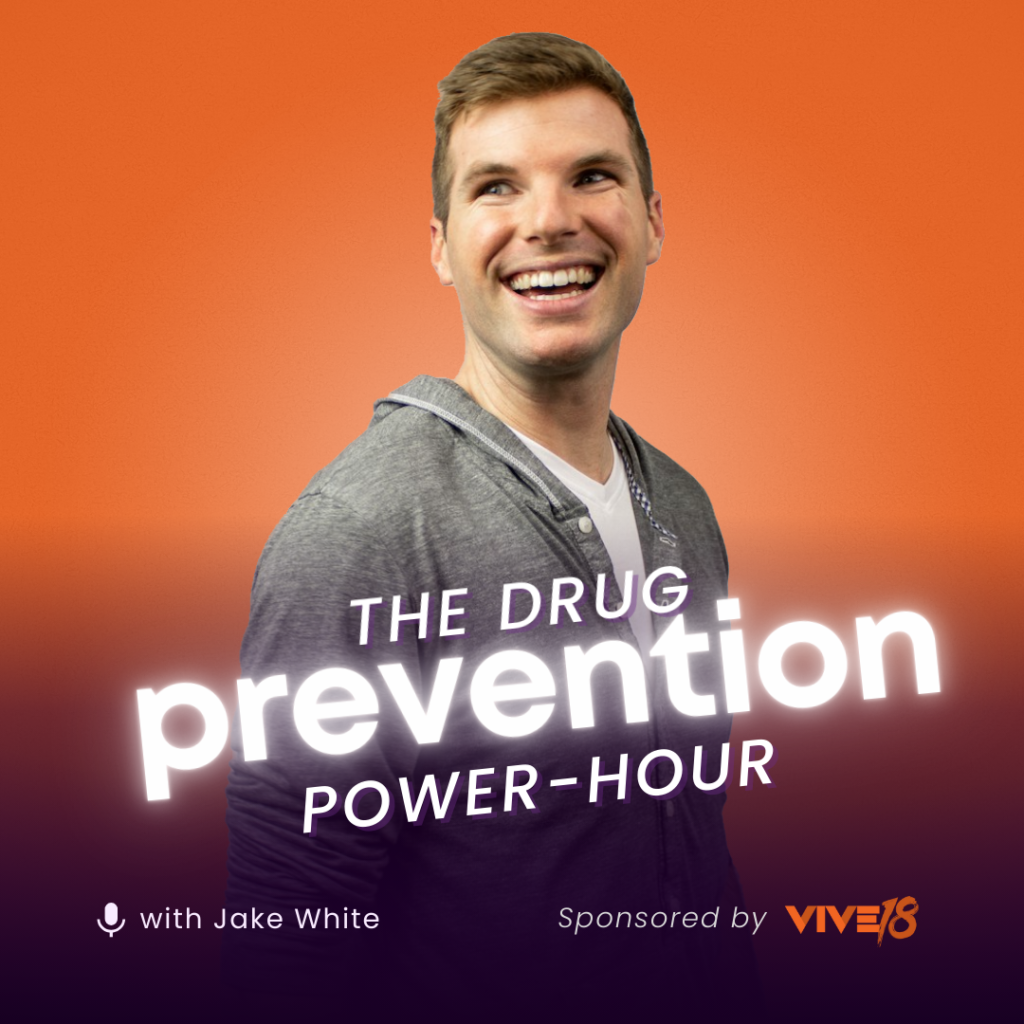
Welcome back to another episode of the Drug Prevention Power Hour. I’m your host, Jake White from Vive 18, and today I’m hanging out with a new friend, Josh Brown Sr. And let me tell you a little bit about him before we dive in and get to know him. He is a powerful anti-drug speaker who draws from personal experience with addiction and recovery to inspire youth to make positive life choices. With raw honesty, engaging storytelling, and a message of hope,
He connects deeply with audiences and empowers them to choose strength over substances. So Josh, thank you for being on the Drug Prevention Power Hour, my man. How you doing?
Hey, thanks for having me. I really do appreciate the opportunity to be honored with you. Yeah, of course. And hey, where do you live? Where are from?
I’m originally from West Virginia, but I relocated to Rochester, New York back in 2021 of July.
Okay, cool. Alright, you’re a New Yorker.
Yeah, well they don’t consider us New Yorkers, but I’m a New Yorker because we’re upstate.
Okay, okay, okay. Is a New Yorker only like if you’re in the cities or what?
You know, that’s how they treat us sometimes. Like we’re far up and over in their Canada buffalo. So that’s that’s not New York, but my license plate says New York. So I’m New York. Yeah.
What? Yeah, come on. Why do they got to be like that?
That’s so funny. Well, you’re a New Yorker to me, bro, if I’m in Arizona. I’m this podcast. You’re a New Yorker. All right. That’s your roots. OK. OK, cool. And like you said, I mean, can I ask how old you are? OK, cool. So you spent your years in West Virginia.
I’m a true West Virginian though. I’m a true, I love the country. I’m West Virginia. Yes, that’s the root.
I’m 37, 37. Yes, I’m a definite West Virginian, for sure.
Okay, cool. I remember when I moved to Arizona, there was this rule, like you couldn’t say you were an Arizonan until you survived three summers here.
Well, that kind of sounds like something that would be like, I haven’t experienced the Arizona heat, but hopefully one day I can. So it’s hot out there, ain’t it?
The Impact of Speaking and Sharing Stories
Right? Yeah. Come on over. Just right. Go during the better times when it’s like freezing cold over by you, you come over by us, you know. Yeah, right. Do it with Josh. I’m excited to get to know your story. I know that you have a passion for impacting, impacting lives because of your story and what you’ve been through. So I just want to ask you, like, what got you into this mission to help people choose?
Yeah, but that’s eight months out of the year here. Yeah strength over substances.
Well, I can just first start off with the name, Josh Brown, the redeemed felon. And I’m a redeemed felon because back in 2014, I was coaching in a school, high school, in Jersey High School. I was substitute teaching and I was a supervisor of FedEx. You know, I think I had everything that I needed together. And I went to a game with some coaches, motel game, had a few drinks that led to a lot of drinks that led to a bad decision.
I decided to get in the car to drive home that night after the game and I woke up, I worked on Saturday. I woke up Monday at an ICU. I didn’t know till Wednesday that, sadly, that night that I drove home, I went onto the other side of road, hit some mailboxes and I killed somebody. And stemming from that decision and accident, I ended up spending three years in a state penitentiary. But while I was in the state penitentiary, I was able to tap into who Josh really was in order to become the breeding felon.
I took a drug program called R-SAT. It was a seven month program. I was lucky to be in there for 10 because I became the coordinator of it. It was a drug program that ran through the inmates. So I was able to learn a lot of things and they offered me the opportunity one day to go speak. And I was like, absolutely not. they were like, you’re not putting shackles and handcuffs on me and taking me into the school to speak to some kids because we’ve seen that on TV. And it was like, no, you’ll just go on your regular with your counselor and you’ll speak. I went, I spoke in front of like 1,300 kids, the first time I ever spoke and I was terrified. But it went really well and a little lady came up to a young little girl and she was crying. And I asked her what was wrong and she said, because of me, she was able to forgive her father who was incarcerated for 10 years and she didn’t want a relationship because she didn’t understand that there are good people in the prison.
So ever since that moment that happened, I’m in there like every day, like, can I go speak? Can I go speak? So I was asked four to six times to go speak while I was incarcerated at three years and I came out and it just seemed like something I would love to do. And I just give myself to people based upon the bad decisions that I unnecessarily, unnecessarily, you know, came up in. So let me hear and that’s why I’m here with you today.
The Power of Programs in Prison
Hmm. Wow. Praise God that you have this story that he’s using to reach other people and offer something like forgiveness. know, that’s a powerful thing. So I’m a little curious too, because you had this program while you were in the detention center. What was this program like? Why do think it was so powerful for you?
Oh yeah, saved my life. Man, because it provided so much structure. Let me tell you, I had my degree. had my bachelor’s, played four college sports. So the program was kind of a little elementary for me. So they really changed it up for me in a sense of how to graduate. So they made me write where there was a lot of book work for people to do, they said that I could just cheat my way through it because I could use, you know, just my intelligence and my education to get through. So they really challenged me in ways like never before. And I’m writing, I’m writing, I’m like, you know, I run NAs. We had these things called groups where we got different concepts. One is nothing changes, nothing changes. So we would have to expunge on that. Like, hey, what does that mean to you? And I’m okay. Like if my mindset, my behaviors and my people, places and things don’t change, my drug habit won’t change. So we did stuff like that. And so I was writing in one day, I wrote, I had like a stack of piece of papers and there was a guy like the reader said, this. And he came to me, he’s like, bro, you got a book. And so like, while I’m working on myself and trying to understand like, Josh, how are you gonna go back to the small town, the people placing things and change and how can you say goodbye to drugs and alcohol? They were building me up to have an understanding and a foundation to do it. And I didn’t even know it at the time. I’m just doing the work. And so because of that, I was able to grow and understand that I needed to just say no to things. I needed to have better decision-making and all the while, because I was the coordinator, I still worked through the program because I had to help other people. So they would come to me, you know, I would have to give them homework. So I would see things that they were doing and I would either do it on my own, but that wasn’t the way that I had to get through the program. So really it was the first ever surgical repairment of the inside soul of Josh Braille.
Wow. Okay. we talked a little bit about this before the call too, because I think this is an important part of your story and who you are is you do have opportunities to speak right now and you also have a full-time job that I think is doing something incredible. Could you mind sharing what are you up to right now as far as that goes?
Current Work and Purpose
Well, right now I’m getting back into the speaking realm, getting back to touching lives. just spoke at a school a couple of weeks ago called Verdis High School. It’s a charter school for all boys. But I also work inside of the detention center. So I’m getting to see kids that made some of the decisions that I made and some of the decisions that people I knew in prison made. And I get a chance every single day to get in their face and have that man-to-man conversation and to explain to them that this is what happens when you do x y and z this is what happens when you don’t strategize or get away from people or make better decisions so It actually goes hand-in-hand the ability for me to speak upon things that I’ve actually been through but now I’m getting to speak on things that I’m experiencing through firsthand experiences So I’m working as a correctional officer and I’m speaking on public platforms altogether And that’s just where my life is that’s where the call is that and that’s where I’m going to reside because that’s what I’m called to do and that’s why
It’s so great because I feel like I’m living in my purpose.
Yeah, that’s cool. That’s really cool. You know, your story reminds me there’s an episode. I think you’ll enjoy it, Josh. If you go back to like episode two with Roger Munchian, he has this program, a story kind of like yours, very different, different way of getting into prison, but in prison, found his purpose, found calling, found Jesus. And now very different way of getting into prison, found his purpose, found calling, found Jesus distributes Bibles across the whole world in prisons and does talks in prisons and has a real heart for that ministry. I think you guys would hit it off. So I’m going to connect you two either way.
Yeah. man, people like him, dang, I almost got a little emotional. People like him help change lives because it’s hard to get Christianity or any religion that you want inside a prison. So when you have volunteers and people like him that come in, man, he’s making a difference. Rather, he’s been paid or was voluntary because sometimes that’s the only Bible people are going to get a touch. So, man, I would love to connect with him because it was people like him that like touch me when sometimes you’re just down.
Yeah, dude, that’s huge. And you want to know something fascinating? I’ve prayed a lot and I’ve had God answer my prayers, but he told me this story because I was asking him, how do you finance your nonprofit? How do you pay for all these Bibles? And he’s like, well, I made a deal with God. said, God, if you take care of my finances, I will volunteer for my own nonprofit. I won’t take a salary or anything.
It’ll just be a hundred percent mission oriented and he learned how to trade stocks and the lives like a king because God has blessed him with that skill of trading and It’s amazing and like he can tell you the story because the timing is perfect It’s got it’s got obedience to God written all over it and just favor it is very very cool so I’m excited to introduce both of you.
Before we dive in, I definitely want to see what we can learn from you, Josh, because when we connected, I was asking you about different coping skills or different tools that you help young people learn. But I don’t want to avoid this opportunity, Josh, for you and I to have a moment because we’re both speakers and to have like an education for our listeners, because what happens when your life is changed is oftentimes you’re like, hey, this is a gift. How can I share it with as most people as possible?
And that’s incredible. That’s a gift in itself. And so you’re using this to spread this good message and to help people. And then I’ve learned some things in the last couple of years I could definitely share with you too. So like, let me be a resource for you, bro, if you ever need to chat about stuff as you go on this journey, I’m available to you. But my question for you is, have you heard of the difference between primary and secondary or primary, secondary and tertiary available to you but my question for you is have you heard of the difference between primary and secondary or primary secondary and tertiary prevention? Does that ring a bell? Not necessarily in those words. Yeah. It’s new language to me too man. Prevention? Does that ring a bell?
Understanding Prevention: Primary, Secondary, and Tertiary
Okay. Okay. It’s new language to me too, So here, I’m going to explain it to you and then I want to give you hopefully an affirmation like afterwards. So primary prevention is helping students who are not using substances stay that way for as long as possible. Knowing, right? Like if you can keep that good decision, then you’re going to have an easier time creating success in your life, right?
Yeah. is helping students who are not using substances stay that way. Knowing, right? if you think that you’re
you’re going to have an easier time creating stuff. And I think that falls on the line of peer resistance skills.
Yes, peer resistance skills, that’s a big, big component. There’s some other things that I’m learning that if you want to dive into, it should be the episode before this where I talk about the 40 developmental assets. Some other things to look in is risk and protective factors. So all this research is done on what helps students become and stay drug-free while others might be more inclined to that risky decision.
So that’s one, that’s primary prevention is helping a drug-free student stay drug-free. Secondary prevention is that student who has started using, maybe they’re not fully addicted yet, but they started making those risky decisions. And Josh, I think this is where your gifting is gonna be. And the science tells us it’s where you need to be. The primary prevention is where I need to be, because I don’t have that use story.
You have something special because you’ve came out on the other side and you give them hope. And then tertiary is the one where, hey, like I could die any day now, I’m addicted. It takes serious resources to get me to turn my life around and I need help immediately, right? So the fact that you have been obedient and saying, hey, I’m gonna take a job in the detention center. I’m gonna put myself with people who are struggling and they need that hope.
I just want to affirm that piece of you, Josh, because it’s something that someone like myself, I’m sticking in primary, bro. And like, that’s my gifting. And you’re going to really make strides in that secondary and tertiary as well.
I take that in wholeheartedly. And also confirmation, because in front of schools you get chances to speak to both. it’s always, it’s always, I was offer a chance to speak with me as questions, but some people are shy so I’m always like I’ll give you five minutes on the side and always get the ones that come up to me. It’s like hey, don’t want to say nothing like hey man, I’ve taken this medicine or this pill or I’ve this drug. What can I, you know, so I always get those type of kids that as a kid I wouldn’t want to, hey listen I smoke, know, hey I’ve done this or I drink on the side. They’re not gonna do that. So I always give that that moment. It’s funny how you said that.
I always get those kids to come to me hey man, I’ve been trying this. I was like, hey, let’s talk. it’s not often something I offer, you know, my email for them or my social media, reach out because I don’t want them just to come and say I’m in your face and gone. So I do appreciate that because I do give my all to those kids that are struggling in that situation because there is another side of it. I hope that they don’t get a chance to see.
Yeah. And it’s important to realize too that you’re, because you’re gifted in reaching those students that have used, that if someone offers you an audience where it’s like, hey, the students here are not using, like, would you have the confidence to say, hey, I’m not your guy? Like, because that’s where the data and the science shows the recovery story actually can be harmful to the students because they see a successful adult who’s like, Hey, I made it out okay. And to them, they’re thinking, great, well, I can’t do that. I can make all mistakes and do all that stuff. So it takes some courage to be like, this is my mission. Here’s who I can help. And this is who I’m here to serve, you know?
Yeah, so oftentimes I speak to a lot of schools, a lot of teams, and you have that in between. So I try in the beginning, honestly, man, just to make sure they understand, because I had a lot of success in sports while I was intoxicated, while I was smoking. So I always try to make it less. I’m gonna tell you some stories. I’m gonna tell you some things, but they’re not to be praised.
Because one story I say, listen, I have 12 state titles in track and field in high school. It was a school record. I lost two races in four years. They were both when I was 14 years old in freshman. I never lost after that. Every single time I ran, I was hired a drone. Now I don’t want the kid to take that and be, oh my God, I can go drink. But no, this is what happens. I was successful there, but things didn’t catch on to me till the end. So I always try to make sure that when I speak at a school,
Um, for the people that are struggling, Hey, look for help and the people that are not, okay, this is not the way you want to go. And please don’t take these stories as celebrations because they’re not.
Yeah. Well, that would be something. That’d be something. Continue watching, And continue looking at the prevention science ⁓ on what’s working, what’s not, because there’s some stuff that you do. We’re always going to grow, right? There’s some stuff that you’re going to add into your talk and some stuff you’re going to take away to use your gift in the right scenario, because I can tell your heart behind this. And you have a gift where you’re going to
Yeah you’re going to reach this target market that other people cannot reach because of your story. But I want to pivot on because you have some gifts for us as far as like connections. So when you’re speaking with young people, when you’re doing workshops or anything like that, what are some of the skills that you equip them with to make their lives better with your experience?
The Power of Personal Stories in Recovery
Okay well, I’m going to start with the second one because we already spoke about it. think peer resistance skills is huge and something that I feel like needs to be taught by parents, know, by schools. Everybody is adult. When they get a chance to, you know, connect with a youth to teach them skills on how to, you know, get out of things. Because we deal with a lot of peer pressure. You know, we got vapes in schools. We got vapes that look like pencils. So like.
Us as adults, we’re not seeing everything like we were when we were younger. So what are we teaching our kids to be able to stand up for themselves and be understanding to say no and like making a part of their skill, making a part of who they are, making a part of like, I’m not different. I’m just, you know, living this side just because I said no. So I really feel like peer resistance skills is huge.
Okay, that’s cool. how do you, what are some examples of things like if I had a student in front of me right now, like I’ll be one, right? Hey, I’m an eighth grade Josh, and like my friends are smoking around me, they’re drinking around me, and I feel like I have to do it because like I don’t have the confidence to say no, or I don’t actually know what to say. Like Josh, what can I say? What can I do?
Well, first of all, I want you to understand that you’re enough and who you are and you do not have to change who you are because your friends do. Now what I want you to understand and practice and know that it’s okay to say no it’s okay to stand up for yourself and an easy way to do that is use a little humor, you know, make a joke out of it. But at the end of the joke, exit yourself. So then they say like, Hey man, listen, he was serious. This is something that he doesn’t want to do. Or one other thing you can do is when you
Discuss what you don’t want to do. I want you to try this when you’re speaking to them. I want you to always refer to yourself as I. Okay, I’m not going to take part in the smoking and drinking, but if you guys want to chill later tomorrow, I’m still available. Don’t make it about them because they’re going to think, oh, my hate’s too good for me. But the whole time you’re focusing on yourself because you’re the only one that can face the consequence of what’s going to happen if things go bad if you decide to indulge with what they’re doing.
I like that. So they’re not feeling like you’re attacking them. It’s like, hey, this, no, this is me. This is what I’m deciding and what I want. That’s cool.
Yeah. I had a friend use that technique on me and I only think he understood it when we were younger. And I think back, he’d be like, you know, I don’t smoke. And he always would laugh about it. And we would laugh at him like, hey, you don’t smoke. But he was still cool with us. So even though he didn’t know it, he practiced this skill with humor, you know, and not making it that he didn’t lose any, you know, social connections. He didn’t lose his friendship because we then decided, hey, there’s the goofball. He don’t smoke, but that’s still my homie.
You know what I mean? So like we gotta make it fun, at the same time, I’m still saying no. You know, I’m like, no, I’m not doing it. You know, like, okay, I’m having fun now. So respect my no and that’s okay. And we’re gonna still be cool, but just not at that moment in time.
Mm-hmm. I like that. And I noticed that before you gave the strategy, you had said, hey, I want you to know that you’re enough. Like, you don’t need this because you have everything that you need. Like, just a reinforcement of like, you never need to do what someone else wants you to do. That’s not your job to please them or to do that. you are enough. That’s cool. Mm-hmm.
Awesome. What’s another thing that if you’re working with young people, you like to kind of impart with them some skills or tools?
Building Peer Resistance Skills
Decision-making because I believe that everything we do in life Has a consequence to your decision. I made a decision I drove for three minutes. It cost me three years three years with my son. I cost me My coaching career comes me a lot of things So I feel like how we wake up in the morning everything that we do they’re based off decisions I always say you got choices What you gonna do?
You know, they got a choice to smoke you got choice to come home. They got a choice to drive you a choice to get out the car So I’m just letting them know how important that every single thing you do when you pick up a pencil That’s a decision. I’m choosing to do my math work when you sit on the player game I’m choosing like everything is a decision So if you’re not taking decision-making important you ain’t taking life important because everything you do is based off a decision Hmm, that’s cool. It reminds me, for us with Vive 18, our decision-making framework is, is that a shortcut or is that a skill set? Are you trying to get the easy one that’s going to bite you or are you doing the skill set that’s going to make you better, make you money, make you friends, all this kind of stuff? I’m wondering as far as examples that resonate with young people when you’re talking about decision-making skills.
What are some scenarios that you think really work with them or like, yeah, how do you make it hit home for them?
Oh man, this is this is crazy. I had no intention on talking to you about this one But I’m gonna say um something that happened to me today at work decision-making I always say a part of your decision-making one way you can change your decision-making is limit the things that you’re sorry for I Tell my kids that all the time. What do you mean by that? All right, if I do something I have to say I’m sorry That’s something you need to limit out of your life. So you’re making that decision so based upon everything you do, when you do something, when I wake up, when I walk through this door, if I go to class, if I have to say, I’m sorry, I gotta take that out of my decision-making skills. Literally, just by living by eliminating the things that you’re sorry for. So example, I had two kids a day. We wake up at seven o’clock in the morning, at 8.45 they started to fight. Had to grab them up, put them in our cell. Good kid, never mess with anybody. And I said, yo, what are you doing? Like, this isn’t you. He was like, but you know I’m not a bully. I don’t mess with people. They were messing with me.
I said, were they talking? It was like, yes. I said, they touch you. He said, no. said, do realize that if nobody’s physically harming you, not harming your parents or not paying your bills or not, the reason you wake up is not, you should not touch them or fight them unless they’re fighting you. He said, what do you mean? I was like, there’s never a reason to go out and fight somebody because someone says something.
I said, because now what’s going to happen? He’s like, it’s going to go to the judge. Yes, you go to court next week. So what are they going to say? Probably, oh, you’re still not ready to come out because you’re still not making good, valid decisions. You’re not eliminating things that you have to be sorry for because you didn’t think of the long-term effect. Yeah, man, I beat him up for 10 seconds. That’s all you’re to get. I said, there’s seven COs. You get 10 seconds. And now the short term is you’re stuck in a cell. You can’t get out. You’re on 23-hour lockdown.
The middle term, which I just made it up right now, is the judge is going to see it. So he’s going to make a decision. And the long term is you may not get to go home. So when you’re balancing your decisions, what’s the short-term effect of this? And what’s the long-term effect of it? Because I always want to look at the long term. And I say, no, the people say the long term is far. But I say, be persistently consistent in excellence. Be very patient. And in your patience, be persistent.
And while you’re persistent, make little goals, little goals, little goals, and hit those goals and celebrate them. Because as you celebrate those little goals, you’re forgetting about the long term. When you get to the long term, you realize you already won because the win is not at the end. The win is in the middle. So you can get them to understand that if I’m eliminating things that I’m sorry for and I’m looking at the long term, I’m making my long-term goals, but in the middle, I’m making the little short term.
Hey! habits and you know that will help me accomplish my goals and all that to get to the end, you’ll realize that patience is not that hard. But if you’re persistent with every little thing you do, you will conquer patience. And I believe if you conquer patience, you can conquer the world. And I stand by that because in life there’s always going to be a stumble. But what do you do when you stumble? I just be patient. Do my persistence.
Hmm, that’s cool. I could tell you’re a good mentor, bro. Like that, that you have these little moments, you know, with them that make a big impact. Cause I think of your example too, like of, people fighting or needing to fight because of words. And a lot of, I mean, I think I do, I see this when we have, you know, a youth group or, or something that people are getting very competitive.
The Importance of Decision-Making
Get out and they can’t help but talk too much trash or whatever it was. And they’re like, they don’t think I’m good. I need to show them I’m good or I need to show them they’re not better than me. And when I think about the person that is very good at their craft, they do not need anyone else to think they’re good. They know it. Like you can say whatever you want to me because I know my value and worth and I know it’s not in that and I know what I’m good at and what I’m not. So it’s one of those things where as a young person, it feels like the threat of a lifetime. You don’t think I’m awesome, I’m gonna show you I am, or you don’t think I’m strong, I’m gonna show you I am, but you lose. You lose when you show us that, especially when it comes to violence.
Yeah, it often it’s just, it reeks of desperation too, you know? Like, and that’s the thing you don’t realize until you’re older and your frontal part of your brain is developed and you start thinking these things. And in the meantime, you know, we hopefully have someone like Josh around that’s like, can speak these little moments into us to help us. you’re right. That’s the lens I want to put on when I’m making those decisions.
Yeah, we and it has to be something that it’s a way of life. And that’s people tend to not put in their decision-making skills. They decide that they want to be something else because this particular group come over. Just be you. Just be enough, like I said before, and just constantly work on the things of saying no because saying true to yourself. And eventually, everybody’s going to accept you for who you are.
I’m like I said, my laughing friend when he first just like, no, I’m not doing it. I was like, why you gonna clown? And then after a while I was like, hey, like that’s who he is. He’s gonna laugh about it, he gonna play, but he’s not gonna do it. But we still love him because he’s uniquely himself. So I just like, if you’re yourself eventually, man, the right people will stand by you. The wrong people will leave you. And once you get to accepting that and who you are, man, life will be a lot easier. It’ll be smoother. There’s always gonna be punts and bruises, but it will be smoother and it’ll be a lot easier.
Yeah, that’s so good. That’s so good, man. And I love what you said is that the right people are going to stick with you. The wrong people are going to leave you. And that is good news. We don’t want to be stuck with these wrong people that are trying to change us and make us into something we’re not. And nobody’s happy, right? Not them, not us. That’s great. Is there any last tools and strategies that you want to leave us with? We talked about decision making skills.
Coping with Stress and Finding Healthy Outlets
And we also talked about being able to say no to things that aren’t healthy this one is pretty, you know, open. think a lot of people know that and it’s just stress management and coping skills because man, these kids are dealing with a lot first drugs and alcohol, you got the social media that’s pressuring you and you know, you’re just strolling and the algorithm is just showing you things that you don’t need to know. I just want to encourage people out there, man, just to take that deep breath. exercise journal, take the breaths get a stress boss. See a lot of kids, you know, in detention, get stress balls. I just want to encourage people to do those things that would help you stress and help you relieve yourself to understand that man. Trouble don’t last always, you know, good days are coming. And my book, I was very stressed out in prison doing that, doing that time period of drug rehab and adrenaline running is how I formed my book. So you just never know just simple stress relieving skills and coping skills.
brought me into a purpose that I never even knew I had. So those things, ultimately, not just for the moment, it could be long term too. And again, something that you can use on your job, know, a family event, drugs and all, you just never know. So I really want people to really tap in. If you’re stressed, if you’re depressed, reach out to somebody, use those skills.
just to get out because we don’t want anybody to suffer and it’s okay to not be okay. And when you’re not okay, we want you to know that it’s okay to ask for help.
Yeah, that’s so good. And it’s okay to try different, like healthy coping skills because like you, you love writing and maybe the next person like, hey, that’s not your thing, but maybe music is or maybe different physics things or yeah, that’s huge. It’s like finding your, finding your healthy coping skill or finding your skillset instead of that shortcut is going to, it’s going to transform your life, you know?
Yeah exercise in the gym I tell kids all the time,
I know that they have phones real quick, just get a deep breathing app where you can just sit down for two or three minutes, maybe five minutes, and just relax yourself. So it’s right at the tip of our hands, but they don’t know if we don’t tell them. So I really wanted to get that out, you know, it’s not okay to be stressed. It’s not who we are. It’s not who you called a mentor, babe.
From Prison to Purpose: Josh’s Journey
Yeah. And I think a powerful thing too is because if you have somebody you’re mentoring or you have access to that looks up to you, sometimes it’s like, huh, let me download this. Like literally demonstrate how to download an app, open it up, do the thing. And they see someone they admire doing it. All right. Now I have permission because deep breathing sounds kind of weird to me or whatever, but all right, if Josh does it and it works, then maybe I could do it too.
Yeah, until you try it. It’s so, yeah, that’s so huge. Josh, I wanna thank you. You mentioned a couple of things I wanna know about. So I wanna leave people with where can we find out more about you, what you’re up to. And then you mentioned a book. I wanna know about your book. And then we’ll say goodbye. Ooh, prison to purpose.
Yeah, my books right here. I wrote it. You can find this up. Yes.
I think it was so amazing for me to be able to once be a prisoner to now to be a correctional officer. You can find that book at www.joshdbrown.com and all there you will find everything about me, my social media handles. You’re able to book me for speaking engagements. You can order my book. You can just learn more about me if you would like. Like said, you can hit the social media handles and follow me, connect with me, speak with me, shoot me a message. I’m always open to talk to anybody about anything, my past, your past, whatever. So I’m out there, I’m here. that’s how I found you, is on LinkedIn. those different ways that you can always go to my website, www.joshdbrown.com.
Okay, that’s perfect. Hey, Josh, thank you for being somebody who’s taking action to help people. And I think that that’s our listeners, right? They’re people that want to use their pain for purpose and they want to help make sure that other people don’t need to go along those same routes. And we’re all learning as we go and we’re trying to do it the best that we abilities. And I see that in you. So bro, once again, hit me up anytime.
You want to chat about things like this or anything we touched on. You want to know more about like, I’m in your corner. I’m a fan. I want to see good people with great character doing this work. So welcome to the family, the prevention family. Yeah. And I want to just sign off by telling everybody who listens to this podcast, thank you for tuning in each Monday. Thank you for investing in the lives of young people. And remember we’re better together. So check out Vive18.com in your corner. I’m a fan. want to see good people with great characters. So welcome to the family. Thank you. Thank you. outjoshdbrown.com and any other guests that have been on the show. We are better together and I think God made us for a community and it just shows up in the results. So tag us in when you need us and we’ll be here cheering you on as you go along. But that’s it. We will see you all next Monday for another episode of the Drug Prevention Power Hour.