Motivational Concerts: Concept and Execution
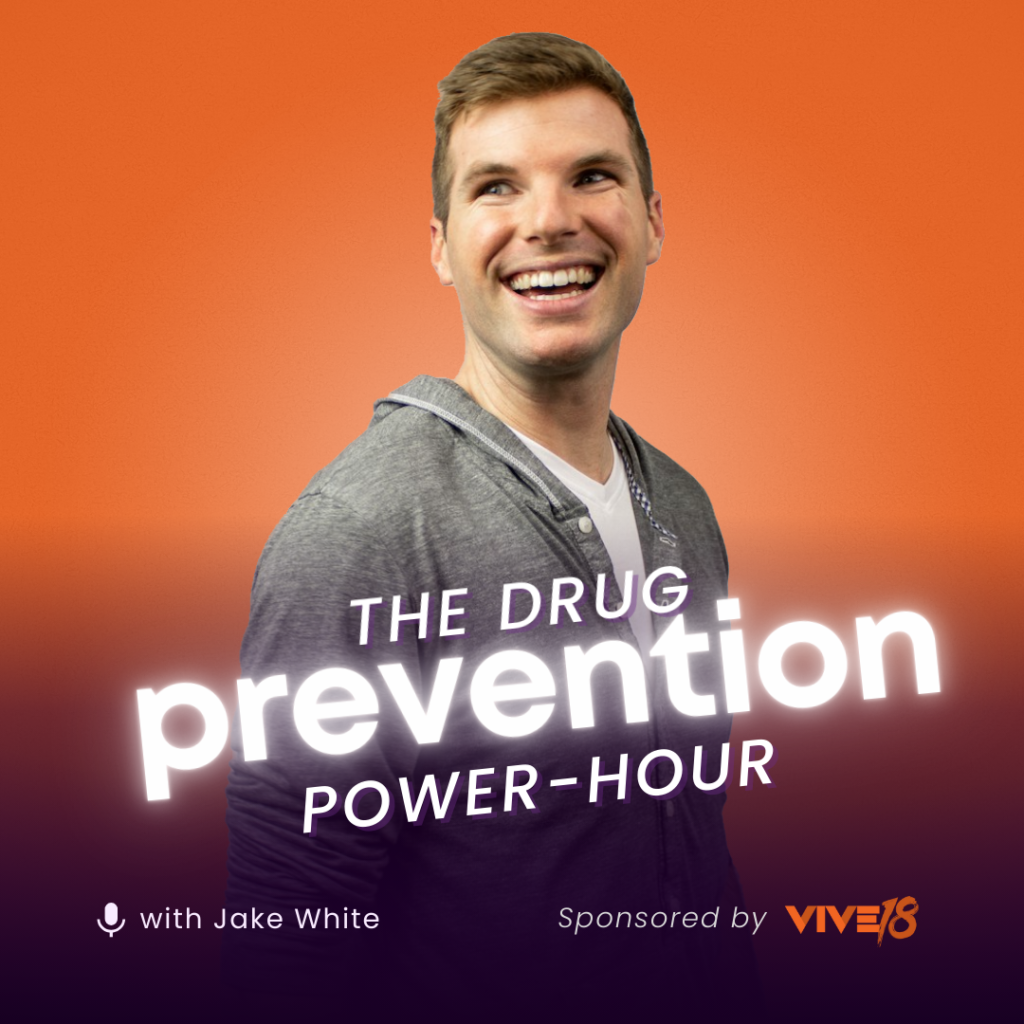
Hello and welcome back to another episode of the Drug Prevention Power Hour. I’m your host, Jake White with Vive 18. And today we are hanging out with a new friend, Elijah Desmond and to give you a little bit of background information on Elijah, he is the vice president of Beyond the Game and Motivational Concerts. A former multi-sport athlete in football, wrestling, track, and basketball, Elijah is now a motivator, keynote speaker, educator, leader, philanthropist, innovator, inspirational speaker, and social media influencer, DJ, and best-selling author. From a young age, he was inspired by community outreach innovator, and great health teacher, social media influencer, and young old who’s inspired by school and understood that youth are the future. His foundation, The Ladder of Life, is a lifelong dream of his that has become the and they’re still excited about the future. It’s on the 18th of July that we’ll see the lifelong dream of a proud kid that reality.
He shares his own motivational message to high school students in hopes of positively influencing their lives, and the foundation gives back to students and communities in need through scholarships and mission programs. He’s spoken over 700 hours throughout his career as an only organization that has two high school students, some help with the private school and some for their families, and the foundation gives back to students and communities in need through scholarship and mission programs.
We’ve spent over 700 hours working on project to spread this message worldwide. Beyond the game, we’ve created a fun and relaxing project to give back to the So we hope you guys enjoy the day and aspires to spread his message worldwide. Beyond the Game is a platform that allows him to give back to the next generation of kids. So Elijah, it’s good to have you on the drug prevention power hour, my man.
Thanks, Jake. Happy to be here. man, when you took me through that bio, I don’t hear that bio often. There’s another bio that I hear. But when you took me through that bio, you took me actually back to my childhood watching my dad put on community events and doing all these things around kids. And I actually never put two and two together until like, hearing that ⁓ ever. Yeah, yes, absolutely.
Whoa, you’re the legacy, man. That’s cool. Well, let’s get to know you a little bit more, Elijah. Where are you from? And then what’s maybe one of the favorite things that you get to do for, I guess, you know, your multitude of jobs, but to get to kind of hone in on what you do and why you love it.
Yeah, absolutely. Well, originally I’m from Ohio. I graduated from the Ohio State University. Proud national champs. Yep. And, and I, I lived there. I graduated from Ohio State and moved to the beautiful islands of Hawaii. I lived there for a few years, then to Vegas. Now I am living in Florida. I’ve been here for the past decade. I live in South Florida, Wellington, down here with my two beautiful little girls and wife.
Say I’m a six year old and a 10 year old and I think she said, what’s the most fun thing that I do? The most fun thing or the thing I love to do the most is actually make people laugh, dance and sing as a DJ. That’s the most fun thing that I do. There’s a lot of different emotions that you can use. You use the word fun and so by far it’s making people jump and laugh and dance and sing, DJing. In the past three years, after graduating as a battle DJ. I’ve been in nine countries and about 30 different cities in the U S and I’m off that and I’m off to Iceland tomorrow, by the way. Yes.
Wow. What? You are? my gosh, dude. don’t know if you, have you heard of the Icelandic prevention model? my gosh. It’s fascinating. So since we’re on the drug prevention power hour, I definitely got to take this opportunity. They have this prevention model that just made waves, like decreased substance use for adolescents. I want to say like more than 50%.
I have not, no but it was one that caught the world’s attention. And what they basically did was they took this word we talked about, fun, and they incorporated that into a young person’s life, into the tune of, if we gave students such an amazing life that they wouldn’t even want to use drugs, what would that look like? So all the activities in clown, if you wanna take guitar lessons, if you wanna do gymnastics, if you wanna go and get it, like go to the skate park, everything is free activities in town, you want to chase your car left, you want to be gymnastic, you want to go and get it like go to the shape park. Everything is bleh. There are no barriers to seeing you doing incredible things as a young person. Another thing they did that was really loud is they got the whole community on board with developing health and fitness. So the parents got a negotiation, the tools were on the same page, law enforcement, and they even did things like saying there are no barriers between you doing incredible things as a young person. Another thing they did that was really wild is they got the whole community on board with developing healthy kids. So the parents got education, the schools were on the same page, law enforcement, and they even did things like saying, everyone has to be in their house for dinner every night. Like, I don’t know how they did this, but mandatory dinner time as a family.
Everyone has to be in their house for dinner every night. I don’t know how they did it, but mandatory dinner time, every family. And they saw way too much of it. I’m just lured to that in the plan, but that’s what I remember when I heard about this model. I got up sleeping at a conference and it seems people don’t. Because they’re not focusing on the negative. They’re focusing on the positive and what we could do instead. That’s awesome. That is super awesome and they saw waves happen. I’m sure there’s more to that than the plan, but that’s what I remember when I heard about this model. I saw them speaking at a conference and achieved huge results because they’re not focusing on the negative, the drug problems. They’re focusing on the positive and what we could do instead.
Yeah, yeah, so you’ll get to see firsthand like what a community looks like around there. I’m super jealous.
Yeah, I’m going back to actually I was there in November and for a entrepreneur retreat and I DJed at their biggest nightclub as well and I loved it so much I’m going back so second time I’ll have my eyes wide open for this type of stuff though.
There you go, man. Well, I want to ask you about two things. The first one being, you do speaking to students. You’ve spoken all over the nation, maybe even the world. And then you have these motivational concerts, I’m super intrigued by. So can you tell me more about those?
Yeah, absolutely. So first off, you know, I tested into college at a young age at 15 years old. I tested into college and my big claim to fame, a lot of people will look at it in a negative light. I look at it in a positive light. I’ve never read a book in my life because I have a learning disability. I can read you a story, but I cannot tell you what I read. I can read an entire chapter and can tell you the first thing that I read.
I can’t retain it, essentially. However, I got good at learning in other ways and I tested in a college at 15 years old. And I also went to an amazing camp called the Hero Brian Leadership Camp. I heard my first motivational speaker and I knew that I belonged with a microphone in my hand. And so I started speaking at 15 years old, tested in the college at 15 years old basically as I grew older and 37 years old now, by the way, as I grew older, my story got better. And I caught an addiction. And my addiction wasn’t drugs. My addiction was actually knowing that I had the ability to save kids’ lives and not be a doctor. And so there’s no better feeling than getting on the stage and walking off the stage and being a regular person, but yet having the longest line of kids, standing in line to get my autograph, sign my, get my, you know, sign my book, give me a hug. But the biggest is getting a hug, from the kids, the, the, a regular hug, but the hug that where they don’t let go. And that hug is typically includes a wet shoulder because they’re crying and at least one or two kids will tell me that they were going to go home that night and commit suicide, but the reason they didn’t is because of the words that I said in the stage. And that’s the addiction that I got at a young age, knowing that I had that power to save somebody through vulnerable storytelling.
And so anyhow I have been doing that since 15 years old. before the pandemic, I decided that I would go to school, back to school, to become a DJ, to host these events that I could have a bigger impact. So typically I’m speaking to one high school and I said, well, man, I want to speak to many high schools. So what I’m going to do is I’m going to go to school to become a DJ and I’m going to create something called a motivational concert.
The motivational concert, essentially, you put five to 10 kids in a high school football stadium and you have music that kicks it off and you need a DJ to play the music and I’m already a hype man. And so I’ll be on the mic, I’ll be on the microphone and playing music at the same time. And once that, that music goes, gets the kids going, we bring, I have three speakers. One of the speakers is actually a celebrity performer, different one every time.
And that celebrity performer performs for 10 or 15 minutes and then speaks for 10 or 15 minutes. The other speakers have music in between them, walk on songs, et cetera. And then they give a message for 20 to 30 minutes each. And then I give my message last. We give out a new car to a high school student who gives back to their community, volunteers ⁓ in their community. It’s a good person, gets good grades, but they’re in a bad situation at home.
We give us some scholarships away as well. Scholarship for entrepreneurship, scholarship for dentistry, and a scholarship for music and entertainment to a senior. So the CARVS scholarship goes to a sophomore or a junior, and the senior gets the scholarship for college. And we bring different messages into the schools according to what the schools are suffering with we basically get different speakers each time. So some speakers focus on suicide prevention. Some speakers focus on, you know, drug awareness. And some schools focus on things like bullying. Some focus on, you know, social media addiction. Some on purpose, et cetera. You know, there’s all different types of topics. But at the end of the day, there’s always different topics and different speakers and it is a full blown concert. had three of them planned before the pandemic and they all got canceled because of the pandemic. And our first one is September the 3rd in Ohio. And it’s been something that we’ve been trying to get up and going all because I was tired of affecting one high school at a time and I wanted to save more than one or two lives in one swoop.
Dang. Okay, that’s fascinating. I have a thousand questions. I love the model and you’re able to reach more people. Who’s the common person who says, Elijah, we want this here. Please coordinate with me to do it. Is that someone from the district? Is it someone from the health department? Who’s saying, come do this with us?
Yes, it’s it’s basically right as a right now. It’s the superintendents that we’re dealing with and that are bringing us in. Right. And and but typically it’s one principal or one superintendent has always had me come in and talk to somebody else. It’s not something that’s marketed as something that’s all word of mouth. But the motivational concerts are new. So I don’t know who will be calling. I just know that one superintendent caught wind of it. And and now it’s you know, it’s a thing that’s happening.
That’s cool. Okay, so at this point, you had mentioned there were some things lined up, the pandemic stopped it. Are you still waiting on that first one to take place or has there been a couple of motivational concerts?
Challenges and Logistics of Concerts
No, the first one’s taking place September the 3rd. September the 3rd. There was three that were planned the year of the pandemic.
Okay. Wow. That’s so cool. I love the innovation from this, bro. Like how do we reach more students? And probably what helps too is you have more partners then to help pool resources to make it reality. Cause you got to reserve the venue. You got to get the equipment there, like speakers, everything that you need. You can pull their resources together. Is this something you imagine? Is it done during the school day where they get out of school or is it a weekend night event? How do you imagine that?
Yeah, so it’s 1030 to one o’clock. So it’s during the day. It’s during the day and it gives the buses enough time because all the students need to be bused in. So it gives the buses enough time to get back to the school. The longest school away is 45 minutes, but it gives them a chance to get back and get refueled. Everybody will be fed while they’re there as well. And then it gives a chance for the buses to drop off all of the district, right? have elementary, middle school in high school in the morning prior to giving them that time to get there as well.
Okay, very cool. Dang. And if you had to break down, because you have such a variety of experiences and things that you’ve done, and we talked before, like before the show started, like you’ve run successful enterprises from the beginning all the way into being a fully operational business that is doing really, really well in many different fields. So when you saw this opportunity to impact students, and you’ve already been running a successful speaking organization, what do you see as the challenges of doing it this way and the possible future of doing this? Do you have a vision for where this could go and where does it start from the unique challenges to the vision that you have?
Yeah, absolutely. So number one, you know, there’s one thing to put on an assembly or a pep rally, right, or to give a talk at one high school. There is an entire other element if you’re putting on a concert. So that’s the challenge in itself is you’re putting on concerts. There’s a lot of moving parts.
Initially, whenever I had this big goal of doing this, I was wanting to do it ⁓ every month. And it’s just not real. I mean, I’m already seeing like it takes a lot of times, a lot of bandwidth. And so this is going to be something more realistically that we’ll do more like once a quarter instead. And so when you look at bringing five to 10 high schools in one stadium, there’s so much logistics. First off, it’s expensive.
I’m looking to raise between $75,000 and $100,000 per event just to put the thing on. What are obstacles? getting the I don’t know if you’ve ever seen a concert stage that’s like a semi bed that’s like you ever see like a huge semi bed that comes down? So like getting that into the football field in the first place, like we had to cut the wire down potentially and then re-put it back up. Like that’s a thing, right?
If it rains, we have to find a place that we can go if it rains. Do we need to put stuff down over the turf? Because there’s so many kids you come out like, you know, over a thousand kids in one place. Where do you put the community leaders and the parents at that are in a different place than, you know, than the kids? That’s a big thing, you know, you know, there’s there’s a lot of moving parts, food, dietary restrictions. I mean, it’s a full blown, you know, event. How many police officers do you hire? How do you know, can you put the car, how do you the car on the field? Because we’re driving a car onto these football fields. Well, what if it rains? Can you bring a car into the high school? Could those doors open up? mean, know, there’s so many, there’s so many, yeah, there’s so many moving parts.
Yeah, because now you’re taking the ownership of being the production company and event manager. You’re raising money to put this all on. You’re coordinating, like you said, not one school, but 10 schools’ opinions on when it should be and where it should be and how we’re going to get there. Kudos to you, bro. That is such a cool dream and vision. And I love to hear too that the excitement of yeah, we’re giving away these giant prizes, scholarships, cars to students who are taking care of their community. What an amazing platform. Can you imagine being a high school student getting awarded for your awesome behavior in front of a thousand students in your state? I got chills just thinking about it.
Yes, absolutely. And a lot of it stems back to the stuff that I personally went through, right? Like, I personally got I tested into college, I went to college early. But if I didn’t have, if I had parents that, you know, were in a different situation, if I was working, I would have been giving them money to pay the bills. I didn’t have to do that. I, you know, saved up my own, you know, couple thousand dollars.
And then they added to that so could buy my first Chevy Clavelier, right? My first car. But if I was not in a financial situation or they weren’t, I would have been out of luck. I wouldn’t have been able to have the opportunity. Same thing with kids driving to work. How do kids get to work in the first place if they don’t have car? But they want to work. If you don’t work, you can’t have money. And so, you know, a car is a really big deal. But I think being a good person and setting that foundation is way more important than work or school. And so, you know, having the kids, we’re having them write essays and, you know, essentially apply and they’re not gonna have any idea who’s getting called to the stage. When we call them, them to the stage, they’ll get a chance to get on the microphone and say what it’s like to win the new car or the scholarships.
Dang, okay. That’s so inspirational, man. I hope that people like right now listening to this, one of your thoughts is like, wow, dang, Elijah’s onto something. That’s really incredible. Like wishing you the best. The other part of our brain hopefully is thinking, how can I do something creative and innovative to get high schoolers engaged in healthy decisions and to bring life-saving information and role models to them? Because you and I are traveling the country doing this, and that’s great if they have the resources to partner with us and do it. And if you don’t, that shouldn’t stop you. Like, God has gifted you with a certain set of gifts that you could be taking an idea and running with it. Because I often think that innovation is just changing one thing. It doesn’t have to be inventing something completely new. And even for you, right? You’re combining a concert with a motivational speaker, like program.
It doesn’t take a genius to have that idea, but it takes a lot of hard work to make it happen. And for me and our platform is like, we’re going to throw a college house party. We’re just going to remove one element, drugs. That’s not a genius idea. Like that’s so easy, but it can change the world. And so I hope that if you’re listening to this, I know you’re the right kind of person who wants to change the world. The question is what’s one thing you could change to be innovative in your field and to attract students to want to come to your event and to incorporate things that they like. And it’s gonna look different than what myself and Elijah are doing, but it’s gonna be just as impactful. So Elijah, I would love to end the episode just by hearing more about your story. We have about 10 minutes left. Why is it that if you had to break down what you do when you reach students whether it’s the stories you tell, the skills you give them, why is it so powerful?
Impact and Personal Stories
Yeah, I think it’s because you feel like you’re on a lonely island when you’re at rock bottom and you feel like you’re the only one that’s experiencing these emotions and these feelings. And when somebody else tells you that they’ve been there too and then tells you the story of what it’s like and you’re like, my God, this is exactly how I’m feeling right now. And it took me everything to get to school today. And this is exactly how I’m feeling. And then, by the way, now I have a solution on how I can get out of feeling like this and it’s okay to feel like this and I’ll have to hide it. And you know, there’s other people that are just like you. ⁓ That’s how you reach somebody from being real and being vulnerable.
You know, I can get on stage and I can tell you all the things that I have and show you all the cool material things and it will motivate a very small amount of people, but it will discourage way more people that I’ll motivate. Or I can get on stage and tell everybody all of the different ways that, that I’ve had, obstacles and, and, and tough journeys and difficulties and tell them about how normal of a human that I am and all the sucky things that I had to go through to get to where I’m at and then maybe give them a glimpse of what life is like and not rub it in, but show them what it could be like. then, and that’s how you resonate with somebody. Instead of the, have this, I have that, here’s what I am, this is what I do. Instead, meet somebody right.
Right where they’re at. And also, you don’t have to be talking to everybody. And you should be talking to people that need you the most. And that’s the people that I talk to, the people that need me the most.
That’s so good. Eliza, it reminds me when I first started speaking, I had this insecurity that I wasn’t cool enough or smart enough or attractive enough or anything, right? And I think that’s relatable. We think that we’re not enough. And so when I started, like, I have to overcompensate. I have to share a story about how I did something cool when in reality it’s the opposite that actually relates to people. It’s a thing that isn’t cool. It’s the thing that we did that was wrong. It’s the failure that’s so relatable. Whenever I’m working in teaching people about presenting and things like that, it’s such a good tip to let others, let someone else say the nice things about you. Let me read your introduction. Let someone else say the nice things. And then you just, it’s your job to show that you’re a human and give us what I love you said to is the story.
A story to connect with on how you’ve been where they are and how you found a way out. Because like you said too, we’re not as bad as we think we are and we’re not as cool as we think we are either. There’s people along the way that helped us get all this great stuff. And oftentimes that’s the best lesson is you’re not alone. You can do this. There’s people here around you to help.
Yeah, and if I can share just to leave, know, kind of a tip or takeaway for everybody just listening, because there’s also somebody that’s listening right now and it’s actually going through some stuff. And it’s the truth. It might be one person and that’s okay. But I’ll share what really works for me when you’re at rock bottom. And what works for me is actually getting out of the bed.
Cause you want to go to sleep, you wake up, you want to go back to sleep, you wake up, you just want to go back to sleep. Cause when you sleep, the pain goes away. And, and if you sleep, you know, you just don’t feel anything. Right. And I’ve never been suicidal, but I have been freaking depressed. The way to get out of it is going and getting out of bed and going and helping somebody going and helping people. And there are people that have it way worse.
There’s homeless people, there’s people with no food, there’s people with no clothes, there’s people that are dying, there’s people in cancer hospitals, there’s people that have 10 days left to live. There are people that have worse for you and there are people that want your time, there’s people that people will not give them the time of day. And the most valuable thing that you have is time. You can give somebody time, even if you read them a book, if you go and you hold somebody’s hand.
When they’re lonely, they don’t have anybody. You give somebody a dollar, you may have $10 in the bank, give them a dollar. You go in to help people, you feed them food, you help people when you are at the worst possible position. All of a sudden, your personal feelings, the things you’re going through, they numb out. They’re no longer things because you’re so focused on other people and before you know it, you’re out of your hole. You’re out of your rut.
Wow, that’s powerful. That in your lowest moment, you could still serve others. Yeah. Wow. Dang. Elijah, this has been super cool. I’m like really glad we got to meet on here and I’m cheering for you, dude. I can’t wait to hear how this motivational concert concept is growing and going, especially on September 3rd. And then is there, knowing that everyone here, you know, they’re working with young people, they care about them, and they’re often, these are the professionals in the field that are listening. And we always wanna do our job just a little bit better every single day. What parting piece of guidance would you give us to better do our jobs and to help support young people today? And then we’ll say goodbye.
Yeah, absolutely. I just give somebody the time. Give somebody the time of day. A lot of times people think things are about money and material things and time is actually more important than the money. So give the people the time and it’ll be more rewarding than giving them something materialistic.
That’s great. And then finally, how can people check out what you’re doing? Are there any websites or socials that you use where people can get in touch with you?
Yeah, definitely. My email is Elijah at go beyond the game dot org. The website is beyond the game dot org. And then my Instagram is DJ underscore smiles underscore. The best way to get a hold of me or you can type it in on Google Elijah Desmond and everywhere LinkedIn everywhere. And and I’m the first one that’s responding to all of the social stuff.
Incredible. Thank you, Elijah. Appreciate you and your good work. And for everyone listening to this podcast, please remember you’re doing life-saving work. It’s worth it. Every seed planted, every time you spend time with these students, doing your craft, getting better and investing, like you said, time, the stuff that’s more valuable than money. That’s how we’re going to change lives. so keep it up and we’ll see you next Monday on another episode of the Drug Prevention Power Hour.