The Personal Journey Behind Brightn
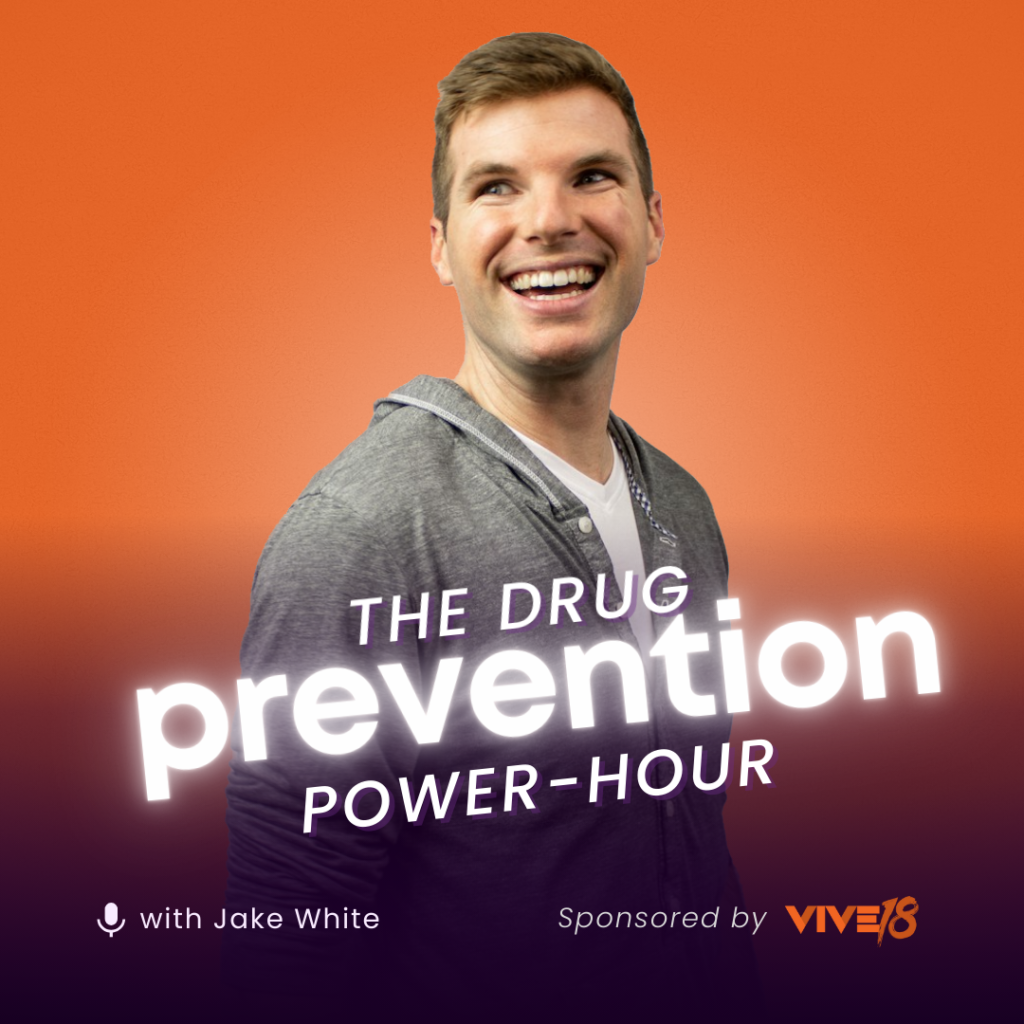
Hello and welcome back to another episode of the Drug Prevention Power Hour. Listen, today’s episode is really special. There’s not much that I would let go this long on an episode. So you are going to get to glimpse into a conversation that we had with Dr. Richard Lopez. His campus was unfortunately seeing a lot of anxiety, depression, and suicides.
So he took action and found this amazing resource called Brightn and they did a study. Now, you’ll learn throughout the call a little bit more. I don’t want to spoil it. I want us to get right in. But if you stay till the end, you will get a special offer. And I don’t want to forget to tell you, know, once you enjoy this episode and if you’re interested in doing some work, just like Dr. Richard Lopez did, don’t forget to share this with somebody because this stuff is life-changing. If you’re in prevention, you know how mental health plays into all of that. So I can’t wait for you to dive in and y’all have a great time as you listen.
I am so excited for today because we’re going to share one of the resources we’ve been quietly testing and seeing really grow. And if you follow our podcast, the drug prevention power hour, you might’ve recognized a guy here in this call named Jeff Johnston. He came and talked, shared his incredible story of resilience and impact. And since I met him, we’ve been watching Brightn, this amazing app you’re going to learn about. We’ve been watching it change students’ lives, and we’ve been watching how they’ve grown and pivoted and listened to students’ feedback. And if you’re in prevention or mental health work, you know how important that is. this tool we’re going to share with you today, is such an easy way to implement support for students when today’s counselors are overworked when prevention professionals like you are wearing 10 hats and you’re trying to do so much more with less time and less money. And so I’ve just, I’ve been geeking out the last month, knowing this is happening, but not like being able to share it with everybody in the world. So this is our chance to help share some resources that I think could transform your communities. Now, for those of you who don’t know,
My name is Jake White. the co-founder of Vive 18. We started by throwing massive house parties and events without any drugs or alcohol. And it quickly led to us sharing with students around the nation that they can make friends, have fun, and feel good without using substances. And if you’ve been in the prevention space for long, you realize that hacking at the leaves of substance use is not going to change our world. It’s not going to change our culture or communities. We really need to get to the root of the problem.
And the root of the problem is students today feel isolated. They feel like their mental health is tanking and they’re looking for solutions, to be like, not to be medicated or not to be looking for shortcuts to change your life around, but they’re really looking for skills and tools to build a great foundation for life.
Pilot Study Results and Insights
And Brightn is one of the puzzle pieces that we’re so excited to introduce to all of you today. So without any further ado, I’m going to introduce my man, Jeff Johnson, the founder of Brightn . Hey, thanks Jake. I’m really super honored to be here to support Vive 18 and introduce Dr. Lopez to talk about our real first pilot study that didn’t really surprise me. I knew that what we had built was working, but to see some of the numbers coming in really validated everything for us.
I’m Jeff Johnston. live in Cedar Rapids, Iowa. I’m the founder and CEO of Brightn . I actually met Jake three years ago when I was touring the United States in an RV called the living undeterred us tour. And I was speaking at Alice Cooper’s teen rocks, a solid rock center. And Jake lived in the area and we had known each other a little bit on LinkedIn and invited him and he helped me out of my booth. And next thing we know where now I’m helping him out. So that’s how it works in the world of advocacy. So I think it’s really important that I tell a little bit about my why. This is not just a side business for me. And this is a passion driven purpose project for me. And actually I do have a quote, it goes like this, purpose becomes passion when it gets personal. And if you say that a few times, it’ll resonate with you. Purpose becomes passion when it gets personal.
I’m going go back to 2016, just real briefly. I don’t plan on spending a lot about this, but it’s important to know where this comes from. But this was my family. My wife Prudence, our oldest son, Seth, my two youngest boys, Ian and Roman. And I really was living the American dream. I was running an investment firm. I had a TV show, had a radio show, kind of had all the trappings of success. And unfortunately on October 4th, 2016, our oldest son, Seth, age 23, ran into fentanyl.
And he was found dead in a hotel room, a needle still in his arm. And it was the end of an eight year horrific experience for Seth that started of all things with an Adderall prescription for attention deficit disorder. But that’s not what this is about today. But that was the first time in my life that I really realized that, you know, untreated mental illness, know, untreated addiction and substance abuse, that death was actually something that could happen. I only saw this in movies. I didn’t know many people that lost a son or a daughter.
But that was like the wow moment for me that I realized that, you know, selling investments wasn’t my true calling that I needed to become an advocate. So when Seth passed, I, wrote a book. started the podcast, which Jake, Jake’s been on a couple of times and I did the tour around the country. and unfortunately, my wife on June 29th of 21, followed, our son Seth. she lost her life, her fight with drinking prescription pills and, and again, mental illness.
And so from age 50 to 55, I lost half my family and my family almost lost me. But the reality is, is that this really gave me new meaning in my life. And that I realized that. That the system we have today is predicated on symptoms and, and, putting out fires. And I wanted to build something that prevented people from going down the same path. My son and my wife went down. So this, this quote by Desmond Tutu says it all. And this really was.
the quote that gave me my marching orders to build Brightn. And it goes like this. There comes a point where we need to stop pulling people out of the river. We need to go upstream and find out why they’re falling in. And that’s really what Vive 18 is all about. When I’m, like I said, when I met Jake and I found out more about Vive 18, I was so excited that it was so much on love and empathy and compassion and inspiration. And it wasn’t all about, you know, don’t do drugs or you’ll die. That talk is just antiquated today.
I saw it in high school. I don’t think it works. I think we need to fill these young minds and young lives up with reasons to live and not fear and scare them on reasons why if they make poor choices, they could die. They already know that. I don’t think there’s anyone in any assembly, Jake’s ever talks to that isn’t aware that drugs and alcohol are bad. They know that it’s like, what can they do then instead of going down those roads? What are some of the coping mechanisms to deal with it when they’re
boyfriend breaks up to them or, they don’t make the varsity or they don’t make the team that they worked all summer to practice for. You know, that’s really what resiliency is all about. So, I think this prevention mindset is what we built Brightn on. So I think it’s also important to know where the name came from. as the universe took two people from me that I loved dearly, it also blessed me with a granddaughter. three weeks after Seth died, his daughter was born.
She is now 10 in October and her name is Brightn . So when I was thinking of what I wanted to name this passion project for me, it was pretty clear that Brightn was right there for me. And so now you know why I built the app and you know where my heart lives. And we’re so excited again, like I said, to partner with Jake and Zion at Vive 18. And also in a few minutes, you’re going to hear from Dr. Lopez, who actually performed our first pilot study and how we’re really, really excited about that but this shows a little bit of the user experience. we wanted to make the app and to me, since you’re in prevention, I thought it was really important to make the app experience engaging, but not addicting. We all know the problems with social media, the insidious algorithms, trying to trick people.
Half adults are addicted to, to tick tock and Instagram today. It’s not just the kids. So we wanted to build something that wasn’t social media based, doesn’t have algorithms that are insidious. Sure. We have AI, but our AI is trained on, on so many different models that dr. Lopez is going to discuss in a minute. I don’t want to take his thunder away from him, but we’re really proud of what we built. And we think that it fits quite well into the educational system today. And we have quite a few success stories that we can share later. and then Tice, I think there’s one more slide. Okay.
And again, we can report a little bit in more detail later on about what we can report to schools. So we have some, schools as, as customers, as clients, and we’re kind of building this, like building the boat on the water, as I like to say, since this is kind of a new, a new issue today is focusing on prevention. Most of the emphasis has always been putting out fires. We want to focus really heavy on preventing them from starting. So with that, I’m going to introduce Dr. Lopez. So Dr. Lopez contacted me last year through my advocacy and some of the activity I was making specifically on LinkedIn and asked to pilot Brightn at his class at Worchester Polytech Institute. And so we did, we were super excited to have a neuroscientist from Princeton reach out to us. And you notice he’s the only one wearing a tie today too. So I think that’s very appropriate.
But to have him actually add value to the story, we had the dream, we had the vision, we had the technology, but he brings the efficacy. And that’s really important for decision makers at schools. It’s one thing to get people excited about these things. It’s another to show them that it actually works. So Dr. Lopez, that’s what I had to introduce you. Again, thank you for partaking today. You’re gonna be doing most of the talking today.
Jake again, thanks for teaming me up and I’m really honored to be here. Everyone that attended this is awesome and just thank you for caring about your students and not just your students, but also your teachers, the faculty. When one person struggles, everyone struggles. The collateral damage in a family and in a school is, you know, it’s something that we need to discuss more than just the struggling student is what goes with the struggling student. So with that, I’ll stop rambling because I can ramble forever.
Thank you, Jeff, and thank you, Jake. It’s an honor to be here. And for those who don’t know me or haven’t encountered me before on social media or LinkedIn or wherever, my name is Dr. Richard Lopez, and I’m an assistant professor of psychology and neuroscience at Worcester Polytechnic Institute in Worcester, Mass. So that’s about an hour west of Boston. And it’s been really a joy and a pleasure to work with Jeff and the Brightn team on this project, because we found out from very early conversations that our outlook on this and our approach, everything was very aligned. And even before I’d ever heard about Brightn , you know, I have some expertise in developing interventions, psychologically informed interventions to help people manage their emotions and improve their health and well-being. And with the advent of AI and all these AI powered tools, I was a little concerned before I knew about Brightn because I was wondering, how can we use AI for good and especially in the lives of young people and college age students? And certainly we can be talking about younger populations as well that some of you on the call might be working with, you know, day in, day out. But our young people are amazing. I mean, some of, most of you know that, like they’re amazing, but they just need little moments and opportunities to reflect, to reflect on who they are, what they care about, what they value, because the world is just sweeping them into competitiveness and consumerism. just they can get kind of lost in that. And all of us can, right? It doesn’t matter what age we are.
We all can find ourselves lost in these big currents. So I think the power behind Brightn is that it allows a pause. And even if it’s a few minutes a day using the app, it doesn’t have to be a lot of time. It allows a pause and allows for reflection. And it allows a young person to really figure out what they care about, what they want to pursue. And you would think like something as simple as that, like, like young people must be doing this all the time or they may have, you they probably have a lot of opportunities to do this, but not so much. I mean, I’ve even informally polled the students I teach at WPI. And I say like, how often do you really have time or make the time to engage in a little self-reflection, whether it be real journaling or using a tool like Brightn, AI assisted journaling. And they say, we don’t really do this. We wish we could do it more. So that hunger is there.
And so it’s really just providing them with a relatively straightforward tool, and then they take it from there. And it can literally mean a shift in trajectory. And we’ll be talking about the effects we saw in the pilot study, where if you can increase a sense of connection between a student and their peers, or maybe decrease some depressive thoughts and rumination, whatever it is, even by a little bit, that can profoundly affect a young person’s life trajectory. And it could mean who knows what positive impacts that could have, or which negative consequences are avoided by these little things that can happen in a person’s life and these moments for self-reflection. So I just wanted to start with that just to kind of contextualize this work and give you a sense of my heart behind it. And more, you know, closer to home here at WPI, in the past several years, we’ve really struggled with trying to understand and improve student mental health. It’s getting better, but we had a series of suicides back in 2021.
And unfortunately, that has continued to happen to some extent on campus, but we’re not alone. This is happening in a lot of college campuses. And it’s all too easy for a young person, as Jake and Jeff have kind of alluded to, to feel alone and isolated and feel like they cannot really reach out to someone. And that’s another advantage of something like Brightn. It’s a relatively low stakes way to begin to reflect and get out of your own head in a way that’s supportive and safe with respect to how the Brightn app is designed. So my motivation for this is definitely multifaceted, but certainly seeing the effects here at WPI. So fast forward now to fall of 2025. So we had about 56 first year students who were beginning their first year of college at WPI. And we randomly assigned some of them to an act-based values training. So this draws from acceptance and commitment therapy, where you get a person to reflect on their core values and how they can lead their day-to-day lives in alignment with those values. And this was an intervention I was already conceptualizing before I knew about Brightn. But then I said, my goodness, how amazing would it be to have students use Brightn in conjunction with this values-based approach to thinking about what they care about what types of activities they want to pursue in their first year of college. And it’s kind of synergistic in that way because you’re giving them a tool, like thinking about their values, but you’re giving them a way to practice that and get a sense of who they are and what they value with the Brightn app as well. So we had 21 students randomly assigned to this values-based training. And that consisted of initial onboarding. So they knew how to use the app and the reflective journaling features.
And then they also engaged in daily reflective journaling at night, so like nightly check-ins, as well as mood check-ins. And we wanted to assess for various indicators of mental health and well-being, including depression and anxiety symptoms, and a sense of social connection with their peers. So not only is this, I think, a helpful approach with respect to the synergy between taking something from acceptance and commitment therapy and scaling it and having that Brightn used in conjunction with it, but we’re also catching people at a critical life stage when they’re leaving their families of origin and the first 18 years of their life and what they knew for that long. And they’re now thrown into a completely new environment with new social opportunities, new stressors, everything, right? And I think that’s an important thing to keep in mind, too. Think about prevention. It’s the approach, yes, and how we conceptualize that, but it’s also the timing and critical moments.
If a student athlete, like where they are in their season, or a young person just starting school, or if they have to transfer and they’re a transfer student and they’re switching schools, thinking about these major life transitions and these points where a person may be excited about what comes next, but there’s a lot of uncertainty as well. So we want to support them and empower them in those key life transitions. So with the WPI sample, with these first year students at WPI, looking at the group that was randomly assigned to implement this values-based training and to use the Brightn app, we had this breakdown of moods, where overwhelmingly it was positive moods, by neutral moods, followed by negative moods. So this was encouraging in that as we were tracking students throughout the first semester at WPI, when they were using the app every night and doing the nightly journaling and the mood check-ins, they’re experiencing relatively positive moods, which was in encouraging to see. So that was kind of our first pass. And then we wanted to look specifically at whether there are any group differences for the first year students who were assigned to use Brightn coupled with the values training versus a control group. And I should say the control group did have existing support structures. So we wanted what’s called an active control group. So the control group consisted of students who were already part of a first year kind of integration program where
They have a faculty advisor. They have RAs. They have weekly meetings. So these are students already receiving support. And some of that support was developed in light of the string of suicides we unfortunately had a few years back. So it was really important to have an active control group that say, what value add does using the Brightn app during their first semester at WPI? What does that add? What does that bring in the context of the values-based training? So what we saw was about a 15 % reduction and anxiety symptoms throughout their first semester. And that was encouraging because again, you don’t know what this means to have that type of impact because it might set someone on a stage for success because if their anxiety is lowered even a little bit, that might boost their self-confidence. So maybe they’ll be more willing to make new friends or join new clubs. Like we don’t know what effects these can have even though it’s a relatively modest reduction, but it’s still a significant reduction that’s worth highlighting. And then if we look at the next results,
With depression, it was even a more pronounced reduction where those who were using Brightn throughout their first semester at WPI saw a 36 % reduction in their depression symptoms compared to the control. And that was really encouraging to see. know Jeff had said earlier, he wasn’t surprised to see these findings, but it’s still really important to say, okay, we can show this efficacy and this movement. And this is only in one semester. So this is only in the course of or three months. So we’re not talking years, right? We’re seeing these changes already kind of play out over a relatively short, you know, short period of time. So the other encouraging thing in addition to the changes in depression and anxiety symptoms was we saw a boost in social connection, about a 27 % increase. And this was assessed by a survey measure where we just asked students, how connected do you feel to your peers around you at WPI? And again, these are just first year students.
So we want that perspective from them as they’re navigating this new environment at college. So that was also really cool to see. Now, this is a little bit more of a nuanced finding, but just to kind of walk you through it a little bit, the green line represents those first-year students who were assigned to use Brightn with the values-based training and those represented by the blue line or in the active control group. And what you’ll see is that those who were assigned to use Brightn and we’re looking at the first four weeks after they started to use it, we actually see a pretty consistent sleep pattern in terms of hours of sleep per night. So the effect here is that, you know, in the first semester of college and in the first few weeks of college, we’re not seeing dramatic changes or reductions in sleep. Whereas those in the active control group, they came in and they started with relatively higher sleep, but then they saw a drop, a significant drop in their sleep in terms of hours per night. So
One way to interpret this finding is that when we think about efficacy, yes, we can talk about changes in anxiety and depression symptoms and social emotional wellbeing, but also can we get people to just kind of maintain a stability with respect to different behaviors, including sleeping behaviors, eating behaviors, et cetera, right? So there are different ways we can think about efficacy when we’re looking across all these measures.
So in addition to the quantitative data I just shared with you, I also wanted to just share some individual student testimonials. So we asked students, what are your thoughts about journaling with respect to mental health and well-being and also with the values integration? And this student said it was so helpful, even just getting my feelings down in tech solidified them and allowed me to think more openly about how to work with them and how to work on solving my problems. So again, this is something so simple and relatively straightforward, but students found that really helpful.
And kind of along the same vein, I found journaling to be really helpful, be aware of, and active in my own personal development. In fact, I think the presence of an AI that responded to my journal entries helped significantly, even if it simply reflected my own thoughts in a slightly different manner. And if you think about it, when you’re talking to a friend, a flesh and blood human, and they’re listening to you and they’re engaging with you, sometimes they’re just their presence and then repeating back to you or maybe say, OK, I hear you’re saying this or could be a therapist, could be anybody, right? I hear you saying this or it sounds like blah, blah, blah. And it’s like, how is that effective? Well, can be because it’s it’s allowing it’s reflecting your thoughts back to you. And that can allow for self insight that would not happen if all of these thoughts just stayed kicking around in your own head. Right. There’s something that happens now. Personally, I believe that the most powerful effect of this is with human to human interaction. But the way that the AI has been trained in the Brightn app, I think approximates that quite well. Because then if it gets a young person to open up a little bit in these reflective journaling entries, they might start to do that with a trusted friend or a relative or a counselor or whoever it may be. So I thought that was really important to zoom in on here with this idea of just reflecting their thoughts back in a slightly different manner.
So in this other question we asked, did using the app in journaling make you notice patterns in emotions or behaviors? And this student said, I won’t list them all here, but yes, it did. Thanks to that, I was able to supercharge my personal growth, shifting my entire mindset to be growth-oriented, tackling procrastination because first year of college, you have to manage your time in a lot of big ways, developing study strategies, gaining social confidence. So the reason I picked up this quote was, again, like, and the thing that about impact is yes, you want to see effects across the group, right? We want to see the overall effects. But just think of like for this particular student, right? Look at all the domains of the student’s life that just the simple act of journaling is positively impacting them. So, you know, their social lives, their academics. And again, you don’t know what downstream impacts that’s going to have, because if they have more confidence than they might approach someone and maybe get that internship. And if they get that internship, they might move to another city where they meet their future spouse. I’m getting ahead of myself.
But you can see how in our lives we have these paths and things that happen in a certain way. It’s like, wow, if I didn’t do that, I wouldn’t have met this person. I wouldn’t have talked. And it’s like, you don’t know what door you’re opening for a young person in this case. Now, there’s a lot here, but I’ll just at a high level say that what this graph is showing is just generally how positive and negative the qualitative feedback was in the open-ended feedback. Now, we only had a small sample of results for this bar graph. And we had some variability. But by and large, what it’s showing us is that all the green bars are indicating relatively positive sentiments about using the app, especially those questions highlighted in that oval. So if we zoom into those a little bit.
The Role of AI in Mental Health Support
Next slide. Yep. So with these questions in particular, students had a lot of positive sentiments and feelings around the journaling being helpful. Did the AI offer good and actionable steps or recommendations? Did you find the AI affirming? Now, that’s a little bit of a sidebar note, but something I want to really highlight, especially if you’ve never used Brightn before and maybe you’ve used other AI-based tools, the way that AI, the AI in the Brightn app has been trained, I think is really commendable because it has been trained in such a way that it is affirming, but it’s not overly affirming everything that you tell it. It’s more like reflecting it back to you. And it’s a little bit more measured in how it responds to what you input. And it’s a subtle difference that you may not always pick up on. But I think that’s a real strength of the LLM and how it’s been trained in the AI app in the Brightn app compared to other AI tools I’ve seen. So I just wanted to highlight that for a second. So some takeaways with respect to how we think about the Brightn app and how it’s being developed and even the user experience. If we take a step back, we can say that journaling, especially for young people, can be a really powerful tool to break ruminative thought patterns, these cycles that we can experience in our own heads. And the feedback we’ve received, at least from the WPI students, is that
Students emphasize getting their thoughts out, seeing patterns, decompressing, and mirroring the episode’s point that journaling externalizes looping thoughts. Now, AI can also be seen as a reflective partner that we’ve already kind of talked about already, but it’s not a replacement for therapy. So a young person, it may be appropriate for that one person to seek other resources and helps with therapy and other mental health care, but it can be an important first step and or a consistent tool for reflection in between therapy sessions. Because I know I’ve talked to Jeff and Carson, others on the Brightn team, figuring out how a young person can use Brightn within the broader context of maybe if they’re seeing a therapist or even just a coach, a life coach. could be anyone. And figuring out how does using this tool integrate into a person’s other help and supports that they’re seeking in their lives.
This using Brightn also allows for personalizable human in the loop options, which is something that know the Brightn team is pursuing, depending on how a person is responding in their journal entries and the mood check-ins, there are ways that things could be flagged to bring someone in if someone is flagged as high risk. And I know Carson and the developers are working hard to really figure out what that looks like and to customize that for different populations, because the needs and the things to look for will change depending on the population. And then the other thing too is that using a tool like Brightn is wonderful where it’s using this type of technology can get a person to reflect and then center, but then figuring out how can they seek help or seek support with someone else? Because you could imagine, let’s say a high school student and a friend both agree to use Brightn , say, let’s do this, dude. Let’s use this for a few weeks. And then it encourages them not just to use the app, but then to seek help from each other as well.
So it can help those in-person connections, even friend-to-friend connections. So that’s all I have for now. but I wanted to make sure we had plenty of time for questions and for if people have questions or comments about any of that. So thank you so much.
Thanks, Dr. Lopez. Really appreciate it. Yeah. Certainly any questions would be great. I wanted to just throw a couple additional comments in that we have kind of discovered as we were building this like there’s one hand up. And that is that, you know, mental health, mental wellness isn’t linear. And I think our system set up to look at it as you put out a fire and then you’re done. Right. The reality is the minute you got things figured out, what does life normally do? You know, it challenges you again. so building coping mechanisms and where Brightn wants to reside is, you know, most people’s mental health is not at the time they’re in the school counselor’s office or with their therapist or with their doctor. It resides at midnight on Tuesday night. It resides on Sunday at three in the morning. It’s that’s where mental health lives. And that’s where Brightn lives. And that’s why we fit so well, where we can compliment what Vive 18 does with their assemblies and all the great things they do on site with the schools. But then when they leave or any other resource leaves, you what stays behind? Like, and people today, you know, like it or not are on their phones. I think 95 % of, all Jen’s ears have access or own a cell phone today and so that’s one of the things that we were thinking of building this out was really focused on making sure that we reside in the places where most people don’t and where most people live when it comes to their, their mental health experience.
We do have a question. Hey, this is Greg. Thank you very much for this presentation. It’s very interesting. My question is around the affirming. Dr. Lopez, you kind of highlighted the affirming aspect of it. And I wondered, Are there parameters around that such that if somebody expresses that, for instance, they feel like hurting somebody else, that the app isn’t going to say, well, I understand and that’s OK. You see what I’m saying? Yeah, no, absolutely.
Understanding Affirmation in Mental Health Apps
I know from having worked a bit with, you know, and helping in my advisory capacity with Carson and the software developers that there are very specific words and phrases and things that automatically that is that type of language is not affirmed. and in fact, using kind of location data or where a person is generally speaking, the app can even make referrals to various resources and mental health hotlines, whether a local, regional or national. So, it looks for that type of language. And me and the other advisors have worked closely to make sure that that doesn’t happen and it’s not affirmed. But with respect to affirming, it’s kind of a gentle affirmation with respect to day-to-day stuff and stressors. Like, I’m having a fight with my girlfriend or whatever. And it’ll actually just kind of you know, say it back to you, but also say, but ask questions back, which, which I think is really interesting because instead of giving you a canned answer and saying, you know, you should do this or it’s going to get you to keep reflecting and thinking, which I think is really important, right? Because it’s, it’s not trying to just, you know, stop the reflection process. And then it gets you thinking more about, yeah, maybe I should consider doing this.
So it’s not just wholesale, you know, affirming anything and everything you might say. So there are strict parameters in how the LLM is trained so that that doesn’t happen. Okay, great. I want to pop in real quick and say how cool that is because when you’re learning about restorative practices or students just going through life, their job is to test boundaries when they’re young. And a lot of people here might be working with middle school or high school students. So to have somebody like a school counselor they might get one session with them. And if that school counselor is extremely effective, they can do more in a 15 minute motivational interviewing session than they could do with hours of therapy. And what Dr. Richard just showed us is like, this tool is trained with the most effective strategies, like motivational interviewing, because that are the same tactics that the AI has been trained on. So I’m just like super impressed.
It’s so, cool. Even our speakers, y’all, our speakers use this app. Z uses this all the time. It’s really cool. I did want to add that, you know, over the last year, year and a half, we have built a very robust clinical advisory board because I don’t come from the healthcare space. My co-founder doesn’t come from the healthcare space. We haven’t been ourselves in the U S healthcare system with payers and providers and broker. So our board we built and dr Lopez is, you know, very hand selected, individual that we now can use his expertise, his experience and, get great input and guidance on how not just to train the, in trade, train the AI, but to make sure that if a student is struggling, there’s a set of protocols. And you mentioned like, we don’t collect any PHI necessarily. We collect zip code and things like that. But, there was a student that reached out to me a couple of weeks ago and they had been struggling and eventually got the 988 number was referred to them. And I actually talked to them.
I called him and said, Hey, can you tell me your whole experience? I want to know like how the AI picked up on your cues and what were you, you don’t have to tell me, you know, what you were posting about, but he was very vulnerable with me as a young man that is actually, it’s a long story, but his mom took her own life and his aunt took, took her own life. So he’s slightly lower level on the autistic scale. So he checks a lot of boxes to be keeping an eye on him, but he uses bright and he’s one of our raving fans. And what he was really liked is that he was making some journal entries that were starting to slide a little bit for him. He was getting down and down and down while the AI picked up on that. Next thing you know, he has an opportunity to call 9 88 and ultimately even talk to a therapist if you wanted to. So, you know, again, it’s not, it’s not perfect. Mental health isn’t perfect treatments not perfect, but it’s trying to provide the best, arrow in the quiver, the best coping mechanisms that we can. And to keep these kids in the autonomous learning realm.
So they’re, so they’re making some of these decisions on their own. That’s how they really get better instead of just being told all the time what to do and not to do. so again, great question, Greg. thanks for answering that Dr. Lopez, but I I just inject a little bit about what we’ve been doing for the last couple of years. Yeah. Thanks so much, Greg. We’ll go ahead. We have couple more questions. Looks like Ivy asked and looks like Kelly too can have a similar question. they’re asking what age group is this app designed for? Obviously the study from Dr. Lopez was first year college students, but they wanted to know a little bit more about kind of the ages that this app was designed for well, initially we were looking at Gen Z. as we started building it out, we noticed there was, a lot of, siblings of our Gen Z years, the younger ones were using it, the parents were using it. So we, we wanted to open up the scope of availability. Now with, I think 13 basically would be probably where it gets a little bit dicey on the apps in general, just because of the, the state requirements. Each state has different rules and regulations. I think under 13, there has to be parental consent, but it’s not social media. There’s no, there’s no element of.
You know, doom scrolling, that’s not on our app. You’re not going to be able to see pictures of other people, how well they’re doing. You know, even though social media has good elements, it also has things like gas lighting and things like that. So we are looking at introducing some peer to peer, some type of a element but right now I think the way we have the journal features can be shareable, which is a really neat feature. So if you’re a student and you’re making journal entries and you’re concerned about something you can share it with your teacher. You can share it with another student. I’ve always wanted to have something like Brightn buddies where like AA has a sponsor. Well, why don’t you have a mental health sponsor? Why you should have somebody that’s readily on call. So eventually we’ll have the ability when you onboard and maybe put three or four students and maybe a teacher into your circle. And then when you feel like you want to, you can share with them that you’re struggling. and you know,
Sometimes I’ll be honest with you and I’ve struggled. Sometimes I don’t want to talk to somebody. You know, if Jake would have called me and wanted to talk to me, I don’t want to answer the phone. I don’t feel like I want to talk. Texting is a little different. It’s a little easier to send somebody a text. You don’t have to stay on the phone and explain things. So we’re just trying to test the waters and provide these students and the faculty a very inconvenient ways that they can engage and have these conversations, but not make it again. We don’t want to make it sound like they’re sitting in the therapist office getting grilled about questions that may be they’re uncomfortable sharing at the time being. So that’s it.
Target Audience and Age Appropriateness
And one more thing I’ll add to the age question. I Kelly has her hand up, so I’ll bring her up in a second in case she has a follow up to this question. But yeah, to Jeff’s point, anyone over 13 can access the app. Anyone under 13 does need parental guidance. And currently we are working with choice charter school, empowering excellence charter schools. They’re here in Iowa where we’re based. And so they’re about high school range, so 14 to 18 and we actively work with them and their population who’s kind of that high school age. So yeah, the app’s designed for kind of all ages, but there are some guardrails for under 13. But Kelly, I’ll bring you up now and if you have any other questions about that, we’ll let you ask them.
Awesome. Thank you so much. This is great. It just really has my wheels spinning and I just thank you for all of the information. I have currently been dealing on a drug-free coalition here in Indianapolis and we have just really, we’ve worked with our school district for a long time. We have a middle school and then two high schools in our school district. And just recently this last semester, we’ve really been able to get in there with them and we’re trying to rework our, they like, mainly vaping, but substance use policy. And we understand that it really has a lot to do with addictions and reasons, the reason why they are using. And so we’re trying to come up with a less punitive approach to what we’re doing with them. And they’re allowing us to, as a coalition, help with some of what that curriculum would be that we are allowing them to do in an in-school suspension versus expelling them.
Integrating Mental Health into School Curriculum
I love this idea of this and that’s what one-minded questions to you is what do you think, obviously we, you know, giving this to students who are willing to do it or wanting to do it, but what would you think about, like I haven’t, you know, dug into it enough obviously to know about this being one of those things that we are asking them to do as a, you know, curriculum piece of what the other things that we’re doing a lot of what we’re doing is, you know, the effects of what these substances have on you. But we know as a coalition that the mental health and the substance use piece go hand in hand. So, you know, trying to get them to understand the reasons why and so much of this reflection, I think would be so beneficial to them. But how effective would it be if we’re saying this is something that you have to do rather than something that you want to do in the moment, I guess? I’m just trying to bounce some questions of your thoughts. Those are really good questions. And there’s a, there’s a lot to unpack there, Kelly, but appreciate first of all, what you do. We need more people like you out there.
But you know, one of the areas we wanted, there’s three areas of the Brightn and we didn’t cover this in the slides, but there’s a lot we didn’t cover today. But the idea on the Brightn was to focus on three areas, health, wealth, and purpose. Those are like the three areas. And you mentioned curriculum. Well, the wealth area, my previous life, I did financial advising, did investing. That was kind of like my expertise. So we, we built out some financial curriculum on the app because again, number one stressor for older gents is financial insecurity. And I think 82 % of American adults can’t get their hands on a thousand dollars by the end of the day, unless they borrowed it. So your relationship with money goes a long ways to your mental health. And what a great time for a great age for these young adults to be learning about about money in, in, conjunction with optimizing mental health. So we built out a financial curriculum. we have like 700 one minute videos on the app. They’re all sent to you based on your deficiencies in those three areas, health, wealth, and purpose. So the more content you put in the AI companion, the more that we can start sending you opportunities. And, um, it takes 66 days for behavior to become a habit. know that right. Kids today don’t have 66 seconds.
But if they’re, if they’re engaging in their AI and the AI sending them, four or five videos to watch, which they can get 10 points. So we gamified the app as well to take advantage of that dopamine and serotonin hitting. but what we found out when we did the financial aspect of the app was that we had satisfied about 92 % of the state of Iowa’s financial curriculum. that was purely by accident, but, since that’s what I did for a living, when I was building out that part of the app, I was very in tune to what part of educational for when it came to money for people to understand. And so when we did our first partnership with choice charter schools, which is one of the best charter schools in the state of Iowa, if not the country, we were really mildly surprised at when they called us and said, Hey, by the way, your financial part of your app, it satisfied almost all of the state of Iowa’s curriculum for charter schools. So that was, that was a nice validation for us, but I think the money part never It’s discussed in mental health. It’s always about other things. And we wanted to really start with these kids and get into, build really good, healthy relationships with money. If I can pop in as well, think why I was so excited to bring this to all of you first is like, Brightn has done something incredible so far, but if you look at the impact they’re going to make on the world, realize you’re like an early adopter. You’re getting in, in the ground floor
That’s why I wanted to jump on the team and be like, Hey, how can we support this? Because now we have the unique ability where if Jeff says, Hey, know, people like Kelly are using this for restorative justice and students are coming in and it’s already using some of the best practices, right? Like journaling and self-reflection and motivational interviewing, having referral opportunities. man, you can’t go wrong with that. But then Jeff comes to me and says, Hey, Jake, can we develop some prevention resources or some restorative resources is now we have the data to go and do that. And y’all are here on the ground floor to help, feed this into being an incredible resource for cases just like that. So since I know a lot of the restorative practices, they use life skills, they use goal setting and reflection, even from, you know, people getting arrested for drunk driving, like adults.
They’re using the same strategies. So to hear that it’s health, wealth, and purpose for these young people, it’s going to send them on the right path a little bit easier and redirect them back onto the path because it’s using the same principles that we know have worked over time.
So I just brought Z up. He’s joined in the chat here and then we do have one more question from Cheska. But Zion, if you had anything you wanted to contribute to this current topic before we move on to our next question, feel free to take it away. Yes, of course. Thank you so much, Tice, for bringing me up. What up, team? What up, everybody? I just wanted to add on to because, yeah, you brought up a good point, right?
I’m forcing my students to use this app for restorative justice and they’ve already been caught. Whatever, right? This is a diversion program. Are they going to be willing to use it? And I think if it’s embedded into the curriculum of, hey, this is just what we do where I got this app, just check it and we’ll do a check in all together and then we’ll go over. We’ve seen like the choice charters have used that platform for English class where they’ll do a check in their first period of the day and they’ll go over some of their you know, their responses and you know, how are you really doing? And that’s just one of the things that they do. So if it’s already embedded into what we’re already doing, students are going to be like, all right, that’s just how we do. It’s not like something on top of the curriculum that they have to do. If that makes sense. It does. Yeah. Thanks for jumping in like that. Appreciate you, man. I love your enthusiasm by the way. it’s one thing you never lack in,
Looks like Cheska has an answer question. Dr. Lopez since the app reflects questions back to students instead of just giving direct answers. How does that work for students who are in a really low moment and just need immediate support before you answer that? While I read this in advance, I went to my Brightn app. I asked. Here’s what I put in the app just to give you a live test here. I said I’m not doing well today based on my dreams. I like to input my dreams into Brightn because I want bright and know everything about me and my past entries.
Well, what are three ways to get me to the next moment? Okay. Very simple, clear, nonclinical type stuff. I hear today feels heavy. Jeff. One way to get to the next moment is to put both feet on the floor and name what you see right now. Another is one slow exhale longer than the inhale. Do this a few times. A third is to reach for something steady, like stepping outside, holding a warm mug or texting one safe person. You got this.
So again, nothing fancy, nothing like trying to talk to your therapist. You don’t have to go down the hallway and go talk to your teacher real quick in your pocket. You know, just, ways that you can get to the next moment. And sometimes that’s what these kids are trying to do. Make it the lunch, make it to dinner, make it to practice. They’re not worried about two months down the road. Like, like adults tend to get caught up into these kids are living moment to moment. If we can capture these moments and then show them that this actually isn’t going to judge them.
It’s going to listen to them and give them some hope. I bet they’ll try it again. I bet the next time that they’re in a situation like this, they’ll probably get their bright nap out and try it again. And we are making a desktop version. So for some schools that I know in Illinois, there’s been issues with phones being allowed in schools. That’s something we’re addressing. So I’m going to head off that question before that’s asked. So anyway, Dr. Lopez, answer that question. kind of took it from you.
Well, want actually before Dr. Lopez, just quickly, since I have a little bit on the product side. And then if there is like an extreme example, I know we kind of hit on this, then the app will intervene with direct support to like 9-8-8 and suicide hotline if there’s suicidal ideation. So it will intervene and connect them to a human if there’s something severe like that. But the AI is also trained. have kind of like a suggested feature. So as you’re going through the journal,
You can kind of control what you’re looking for. So instead of just it being a sounding board and sort of reflecting questions back to you, you can kind of control how the journal responds as well through a variety of different methods. So it’s trained on, you know, CBT and ACT. I don’t have the list in front of me, but we have all sorts of different scientific methods in there. And one of the roadmaps for this quarter, we actually have it to where you can journal without AI and then you can trigger it later.
or you can journal under a lot of different methods. So there’s like gratitude journaling, there’s problem solving journaling. So kind of going into the session with a direct plan of what do you want to get out of this session? What are you looking to accomplish? And so we kind of give the user a lot of control. And again, if there’s anything severe, then there will be that intervention where we can direct them to the proper resources outside of the app.
Personalization and User Engagement in Mental Health Apps
Yeah, because the app is growing and evolving in these really interesting ways for personalization. I just want to hit on having a young person, let’s say they’re early high school or even middle school, having them have a human touch point with their counselor. And like Jake was saying before, even a 10 or 15 minute meeting with a counselor can be really impactful. But if part of that meeting was the counselor introducing the student to Brightn and helping the student, especially if they’re younger.
I want to send y’all out with something, gift, Jeff and the team have basically offered two-thirds off of the price. So you’re only paying a third of what you would. So if you want to take advantage of that, even if you think like, maybe I’ll do it, but I’m not really sure, just scan the QR code and we will make sure to keep that discount for you. Because we really want to partner with world changers like you. you’re the type of people that if you’re working with a grant or a district, you want to change lives. Like, I know you. I’ve sat down with you at conferences and dinners and been at your schools.
You’re the ones who showed up when you don’t have to to a webinar to learn about this cool, innovative new tool. So even if you’re just curious about it, that QR code will take you to a meeting to pick a time with Zee. He’s been using the app for years. He’s fully bright and fully Vive 18. You can’t get a better, Man, that was incredible. I am so fired up listening to that even the second time. If you are listening to this, you’re not on YouTube, so you couldn’t get the QR code, just go to Vive18.com and message us. Just make sure to mention Brightn and we will get you all the information that you need for this. I, man, for everyone listening, as always, we want you to know how incredible you are that the resources and tools you bring into your community are making a difference. And if this one tool can help us maximize every single person working in public health, in education, in youth support, then it’s something definitely to look into.
So if that’s you and you’re in a position to have a conversation with us because you have that pull in your community, go ahead to Vive18.com, send us a message and we’ll link up with you. Keep doing the amazing work you’re doing. Share this episode with a friend and we will see you next Monday for another episode of the Drug Prevention Power Hour.